
The spire of St. Agnes Catholic Church and an eastern star on October 13, 2010.
The spire of St. Agnes Catholic Church and an eastern star on October 13, 2010.

After it was closed by the Archdiocese of Boston, the Church of St. James the Apostle was sold to the Greek Orthodox Church of Saint Athanasius the Great, who's parish was looking for a larger space. They held their first service in their new location on December 3, 2005. August 31, 2010.
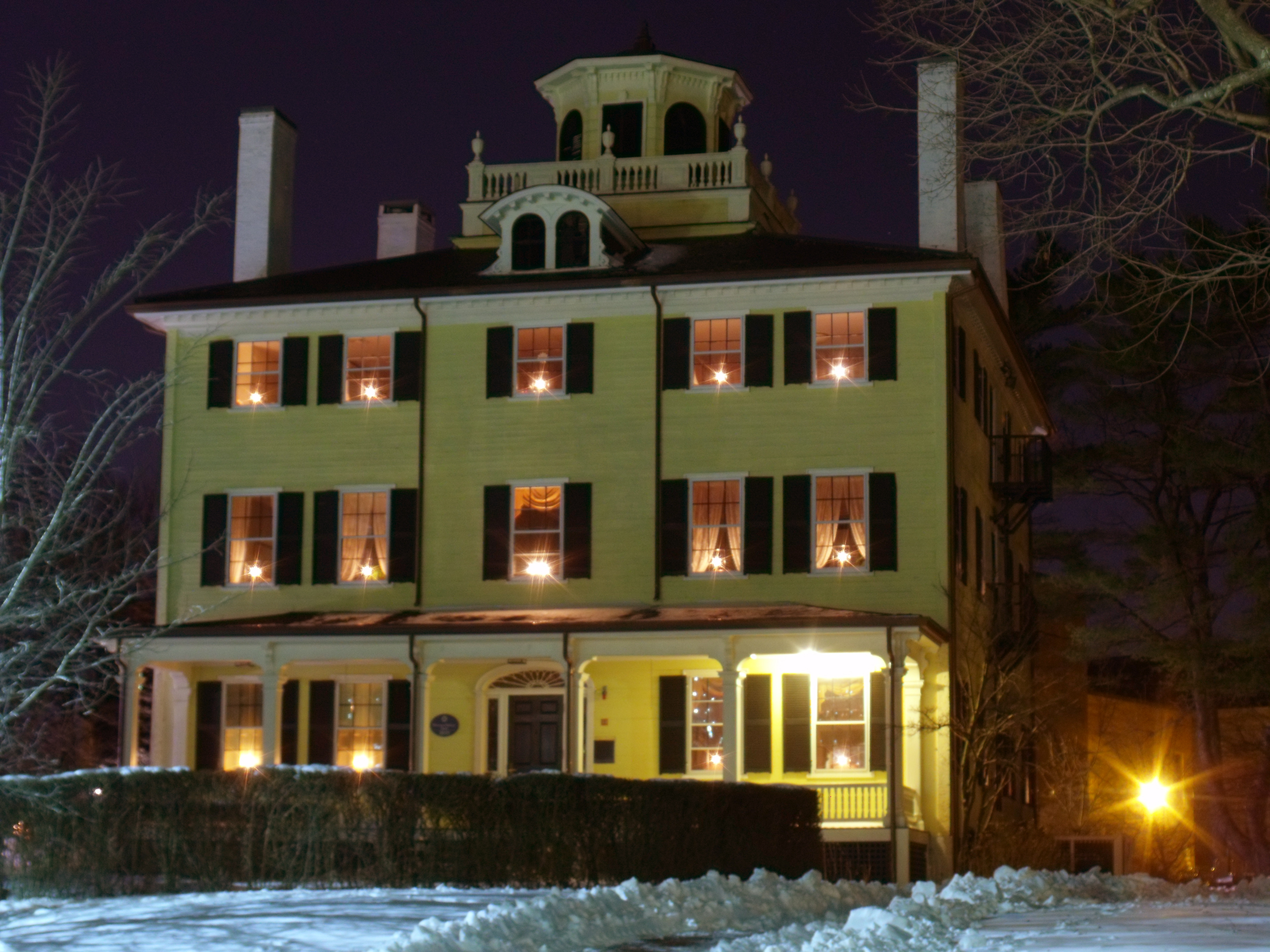
The Whittemore-Robbins House lit up for winter on the night of December 28, 2010.

A view of Arlington in the winter from the Alewife Parking Garage on February 2, 2010.
To the top right, one can see the rubble of the Symmes site. At the top middle, the building just barely peeking above the tree line, with the three white dots on top is the Stratton School. In the center, the gabled roof of Arlington Senior Center and the white steeple of the Park Avenue Congregational Church can be seen. At the middle right, three of the four white chimneys and cupola of the Whittemore-Robbins House is visible. And to the left of that, there is the blue-domed steeple of the Highrock Church.
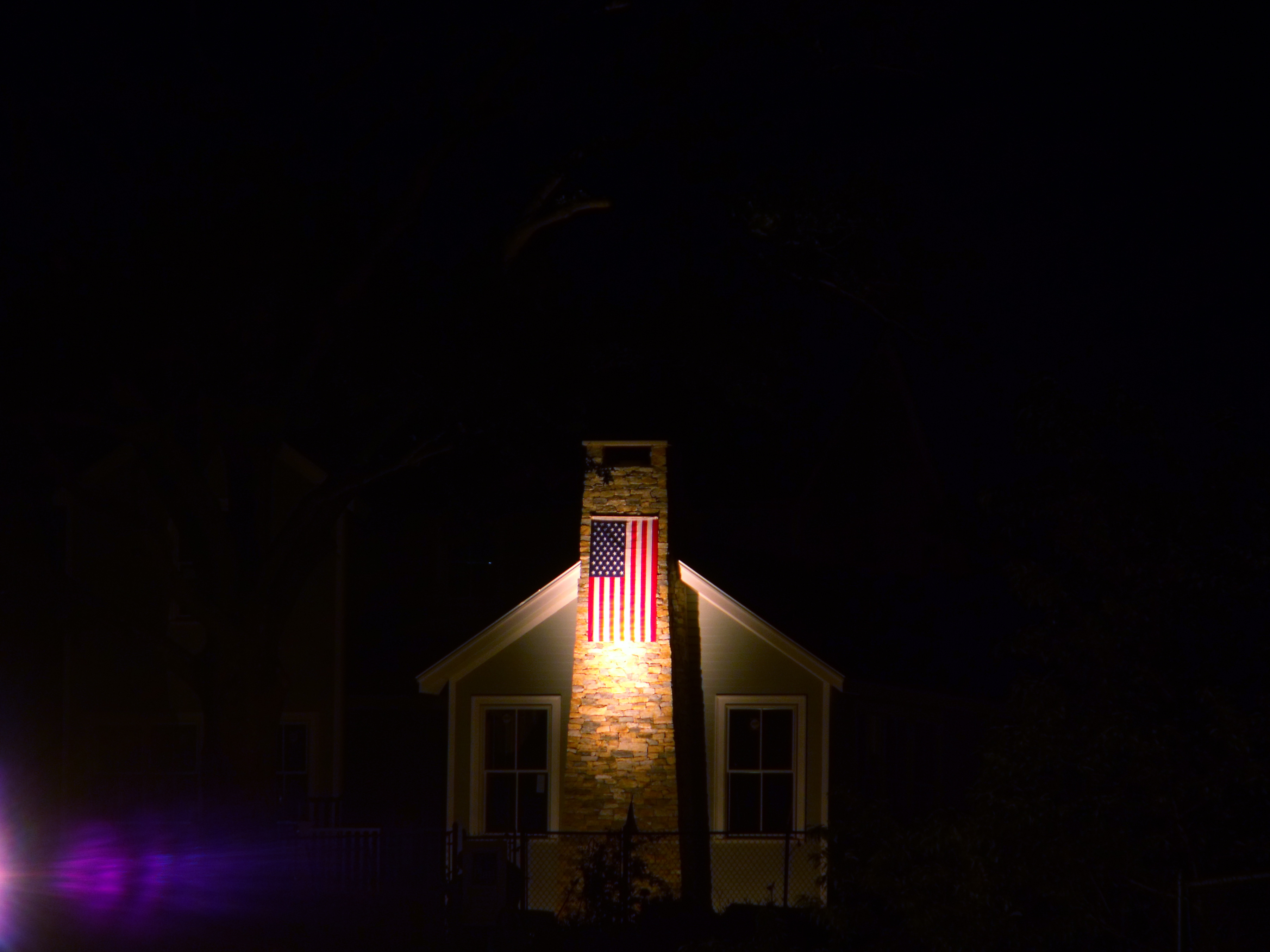
An American flag displayed on the chimney of a garage abutting Robbins Farm on July 4, 2010.
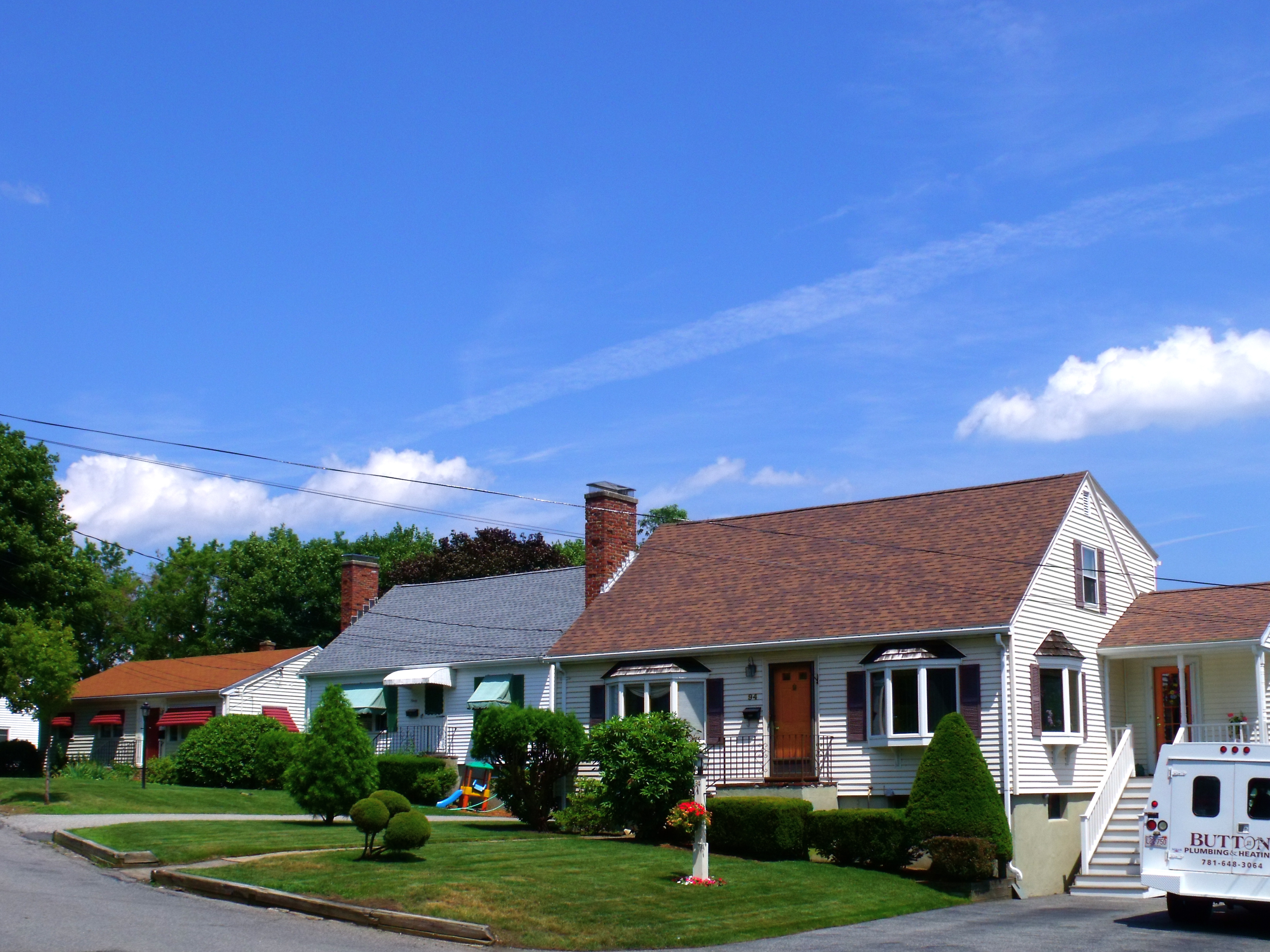
Homes on Dickson Avenue, June 24, 2010.

The site of the John Cutter House, which was occupied for years by various automobile related enterprises and now developed with townhouses. December 7, 2010.

The Court Street Post Office with its restored front door on December 7, 2010.
On November 20, 2010, Entryways 12 showcased the front door of the Court Street Post Office which, at the time of the photograph, was being refurbished.
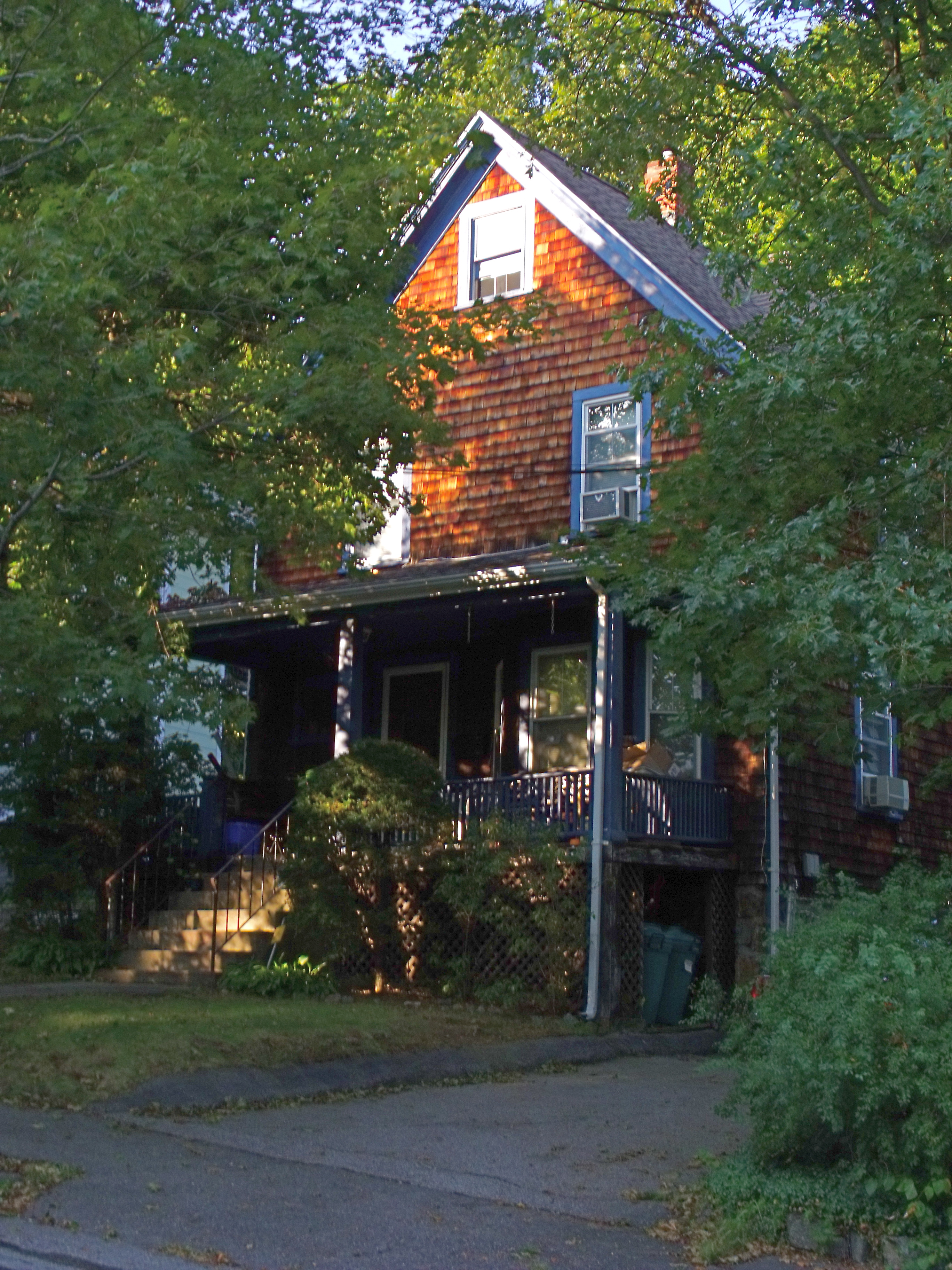
The childhood home of composer Alan Hovhaness on August 31, 2010.

The flag flying at half mast in remembrance of Pearl Harbor Day at Town Hall. December 7, 2010.

The lights of the Whittemore-Robbins House reaching out to the Old Burying Ground on January 13, 2006.

The Central Fire Station watches over the Arlington Veterans Memorial on August 19, 2006.
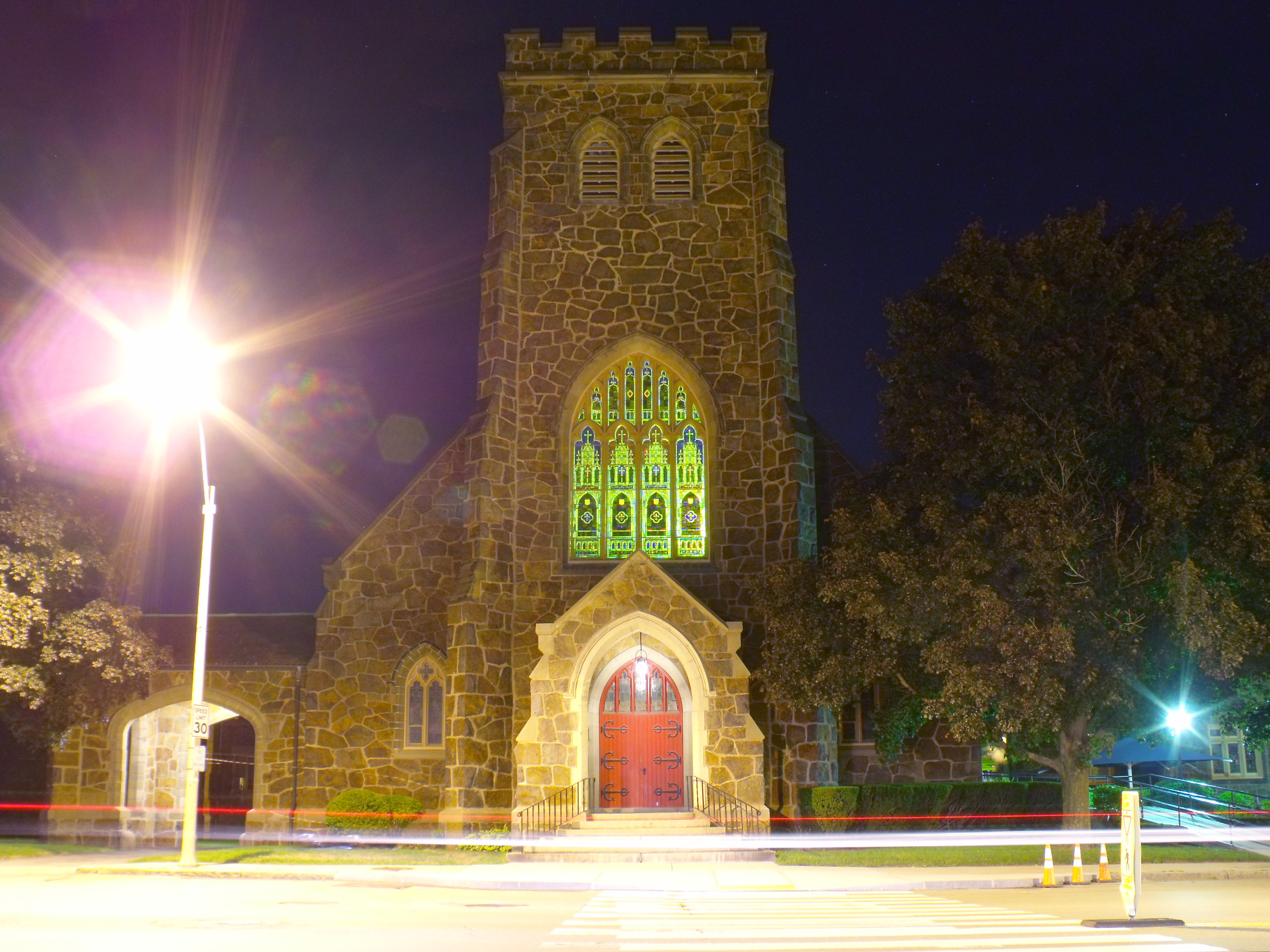
The First Baptist Church on the night of September 5, 2010.
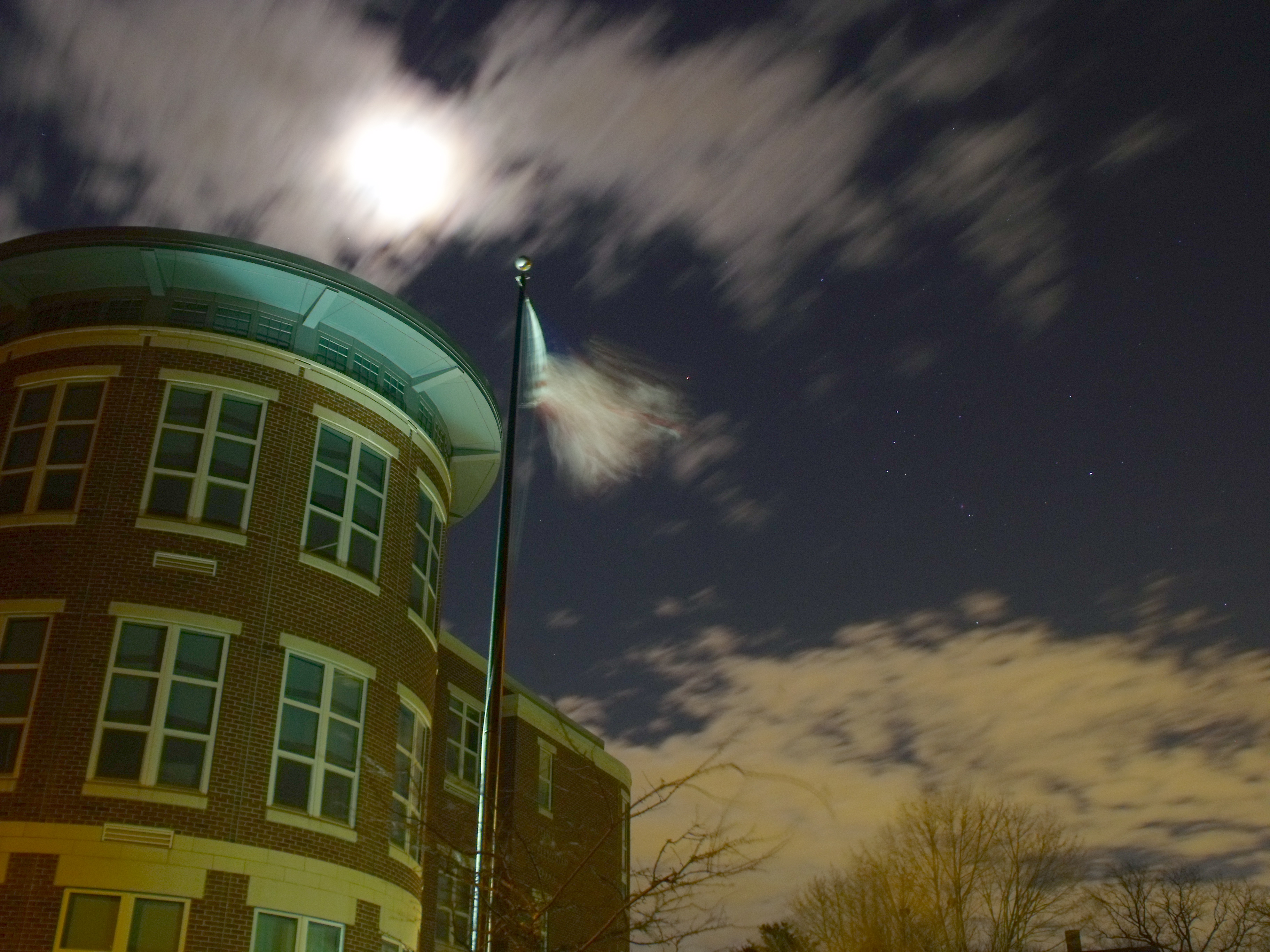
The constellation Orion appears through the clouds above Peirce Elementary School on November 23, 2010. View 2 of 2.

The recently rebuilt Peirce School on the night of November 23, 2010. View 1 of 2.
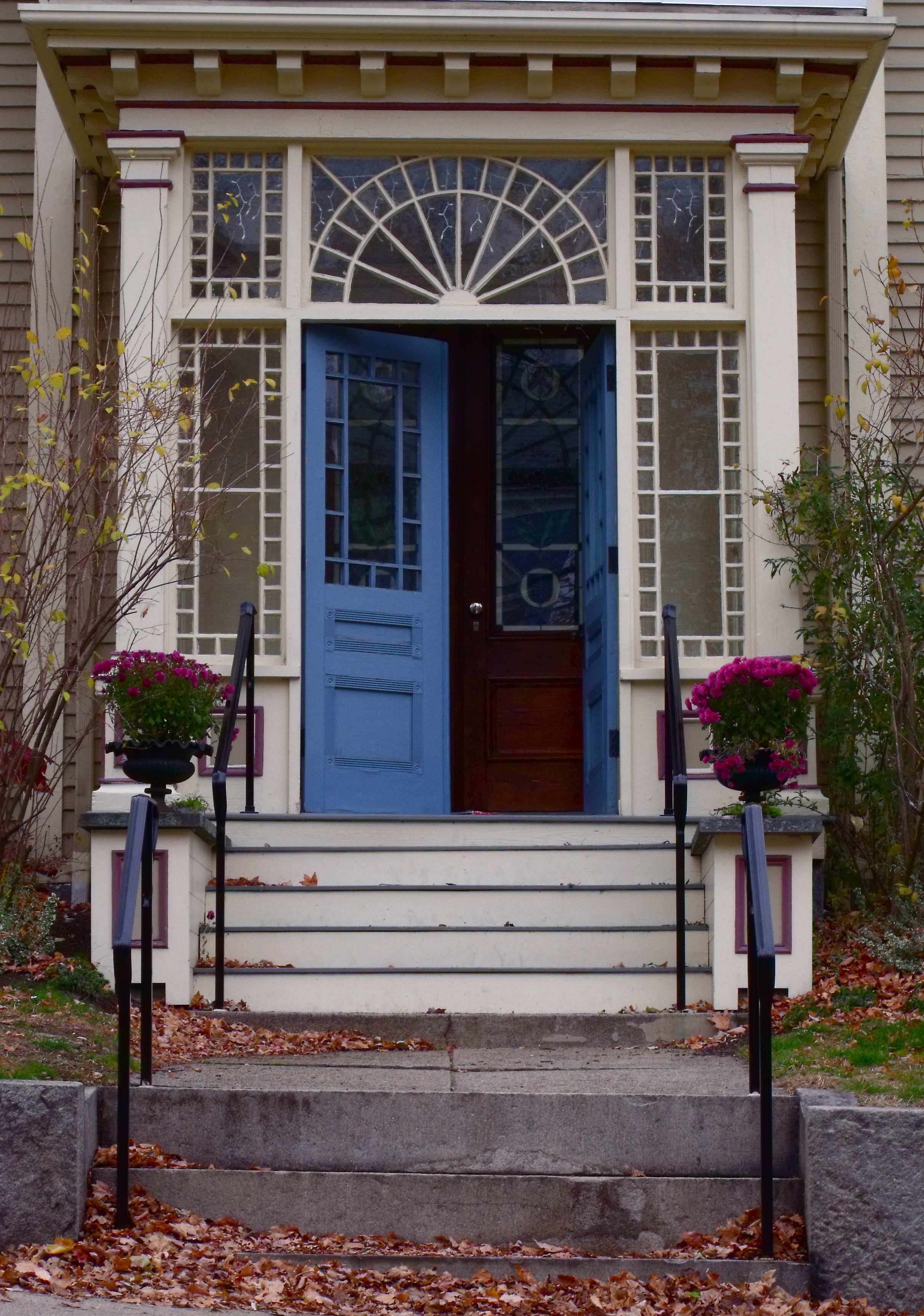
The open foyer door of a Russell Street home on November 15, 2010.
“Entryways” is a series documenting some of the doors, gates, openings, portals, entrances and exits of Arlington.

The doorway to the Superintendent's Office inside the Court Street Post Office on November 15, 2010.
“Entryways” is a series documenting some of the doors, gates, openings, portals, entrances and exits of Arlington.

The doorway to the Court Street Post Office on November 15, 2010.
“Entryways” is a series documenting some of the doors, gates, openings, portals, entrances and exits of Arlington.
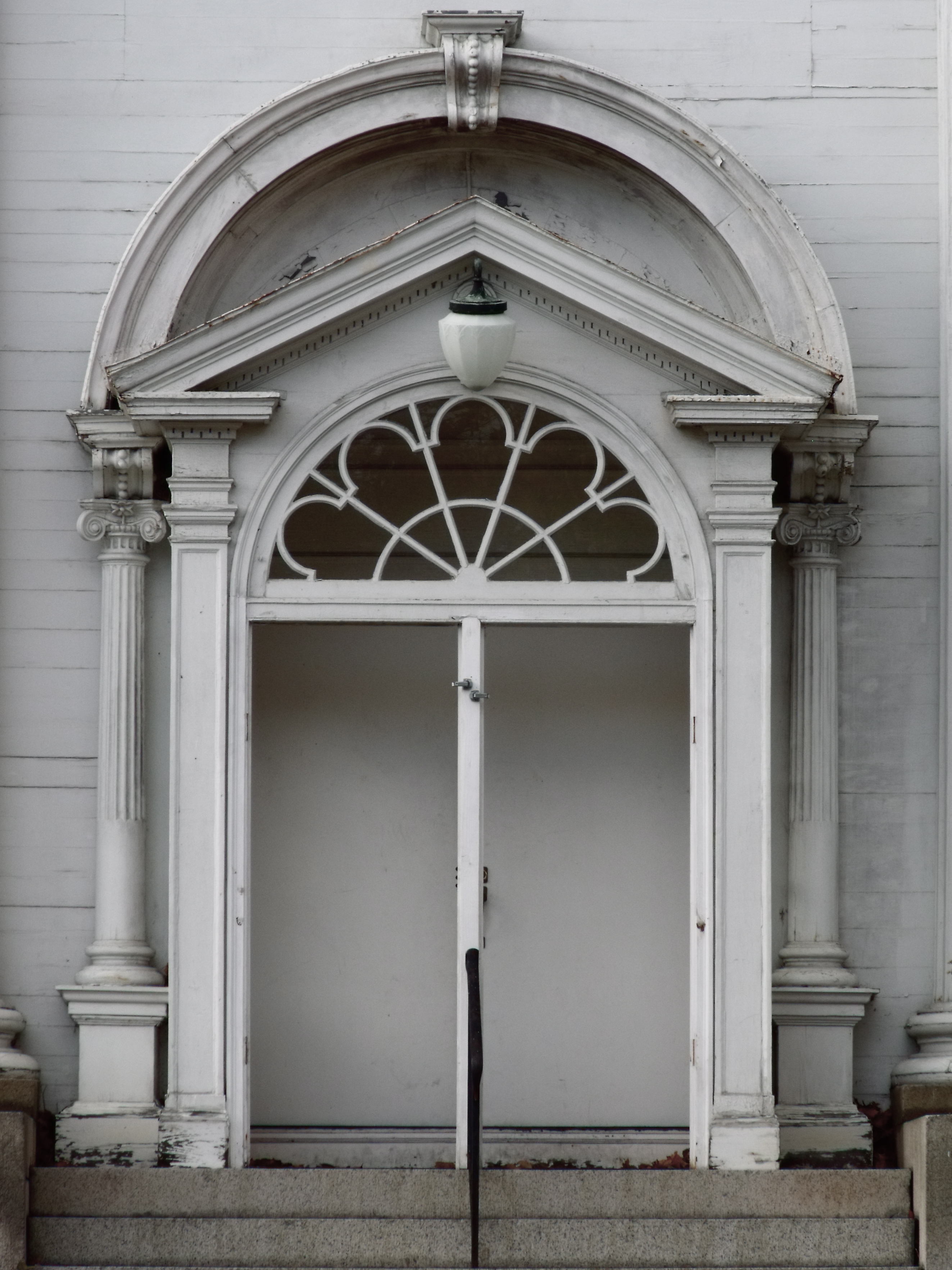
The Pleasant Street Congregational Church on November 5, 2010.
“Entryways” is a series documenting some of the doors, gates, openings, portals, entrances and exits of Arlington.

The former Arlington High School entrance on Academy Street. August 8, 2010.
“Entryways” is a series documenting some of the doors, gates, openings, portals, entrances and exits of Arlington.
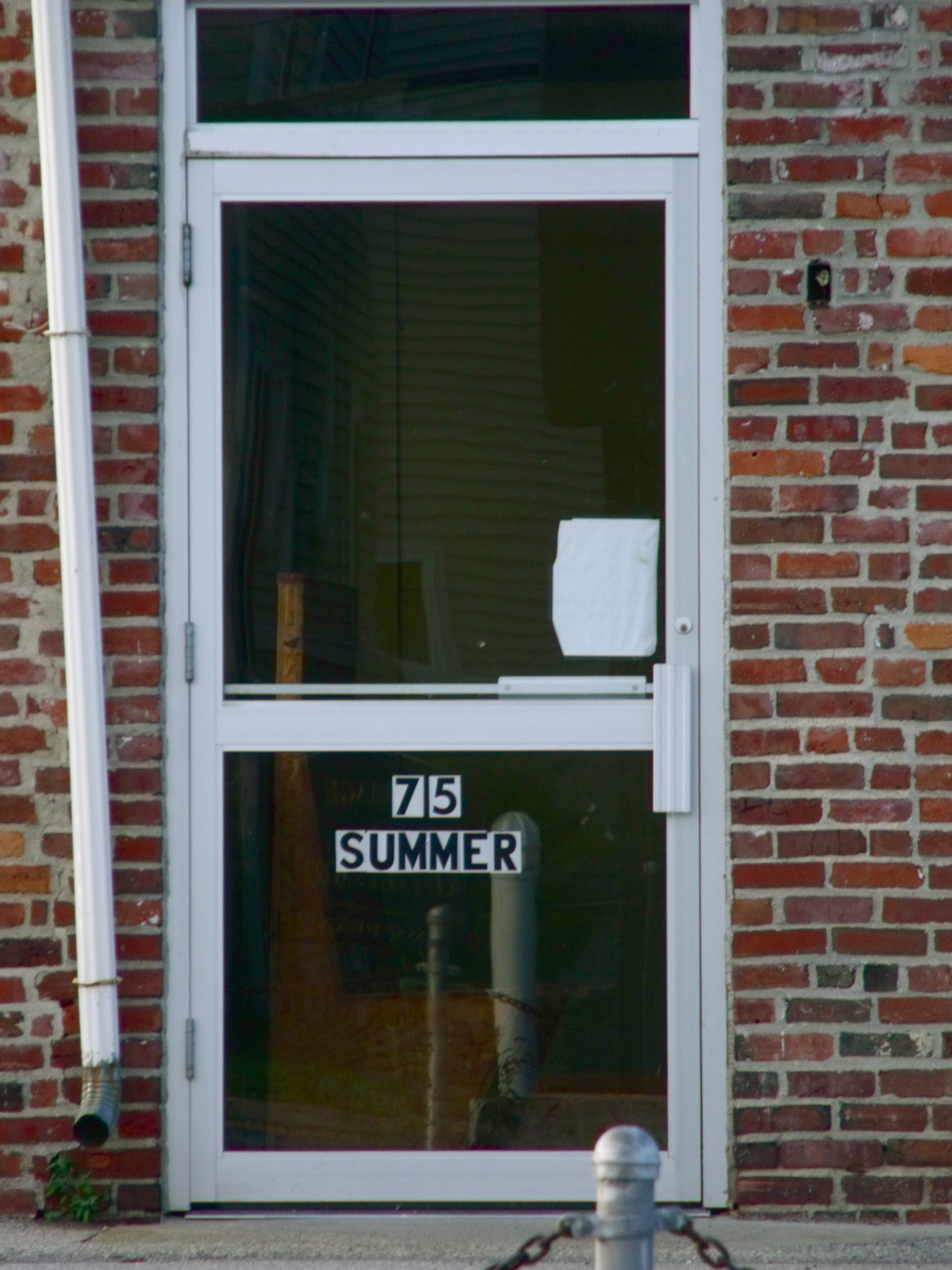
An empty 75 Summer Street, past home of Mirak Auto Dealers and future home of Fresh Pond Seafood. July 22, 2010.
“Entryways” is a series documenting some of the doors, gates, openings, portals, entrances and exits of Arlington.
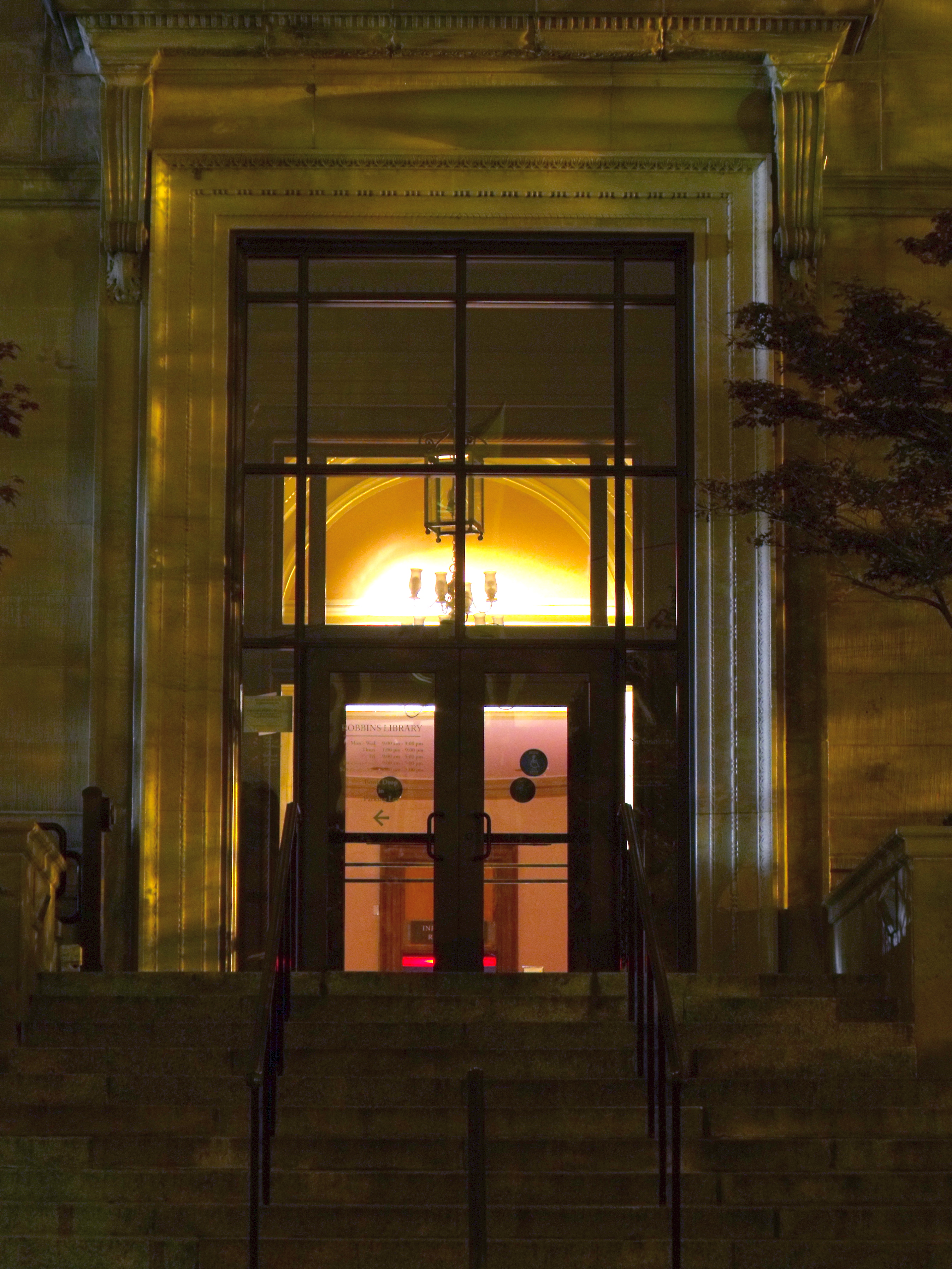
The Robbins Library entryway is modeled after the entryway of the Cancelleria Palace in Rome. August 13, 2010.
“Entryways” is a series documenting some of the doors, gates, openings, portals, entrances and exits of Arlington.
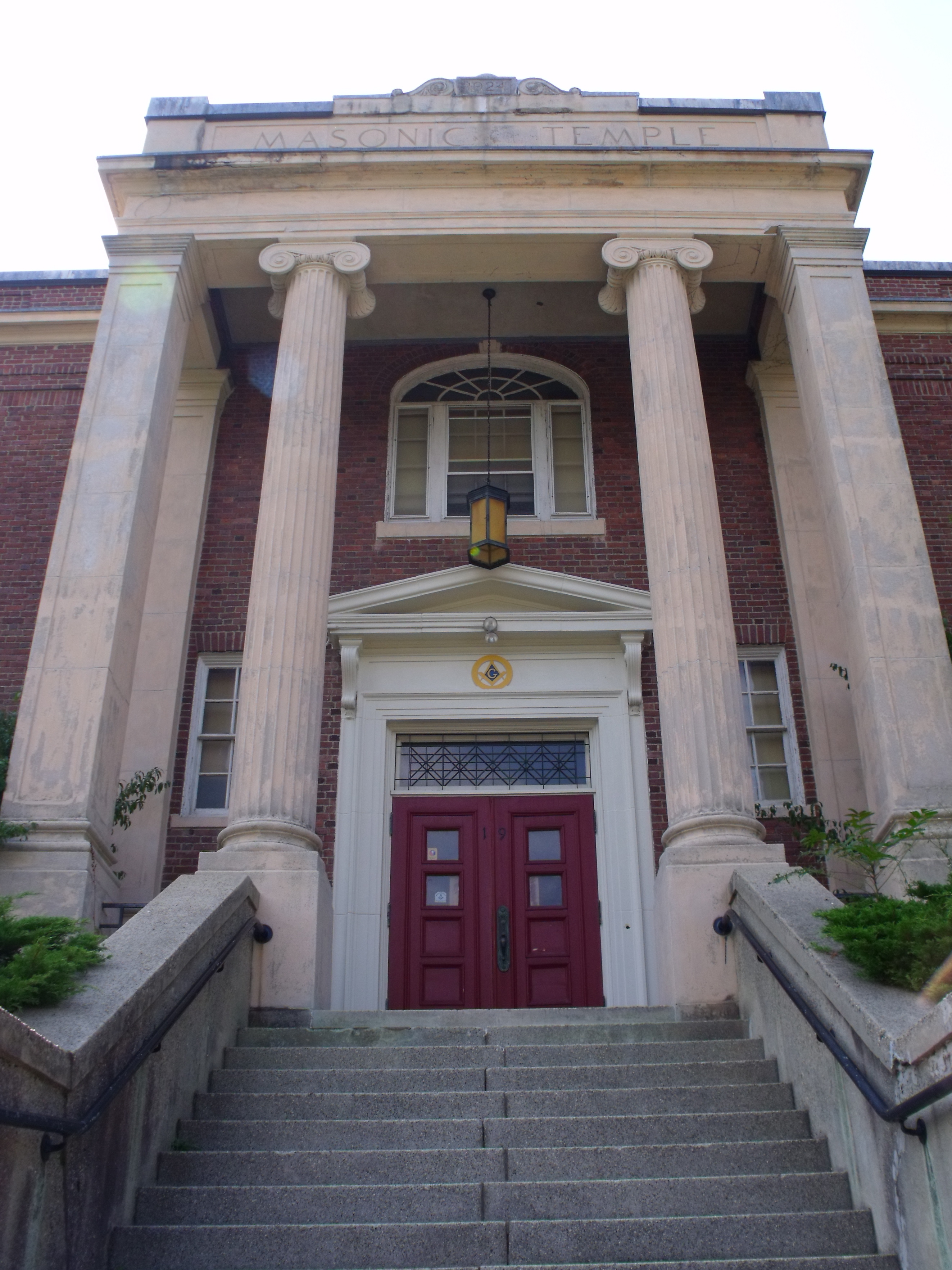
The Mystic Valley Lodge on Academy Street. August 9, 2010.
“Entryways” is a series documenting some of the doors, gates, openings, portals, entrances and exits of Arlington.
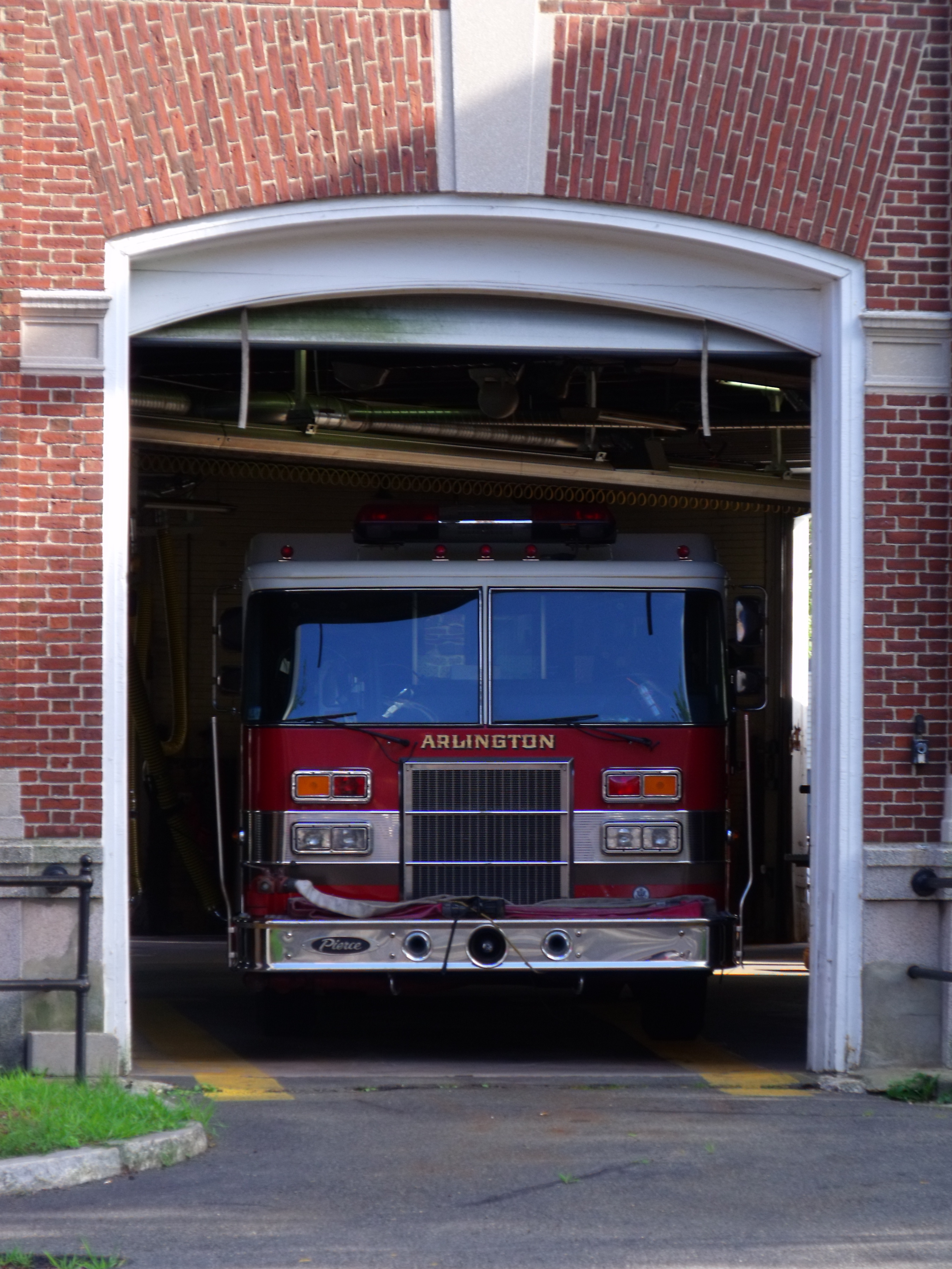
One of the exit/entrances of the octagonal Central Fire Station. July 22, 2010.
“Entryways” is a series documenting some of the doors, gates, openings, portals, entrances and exits of Arlington.
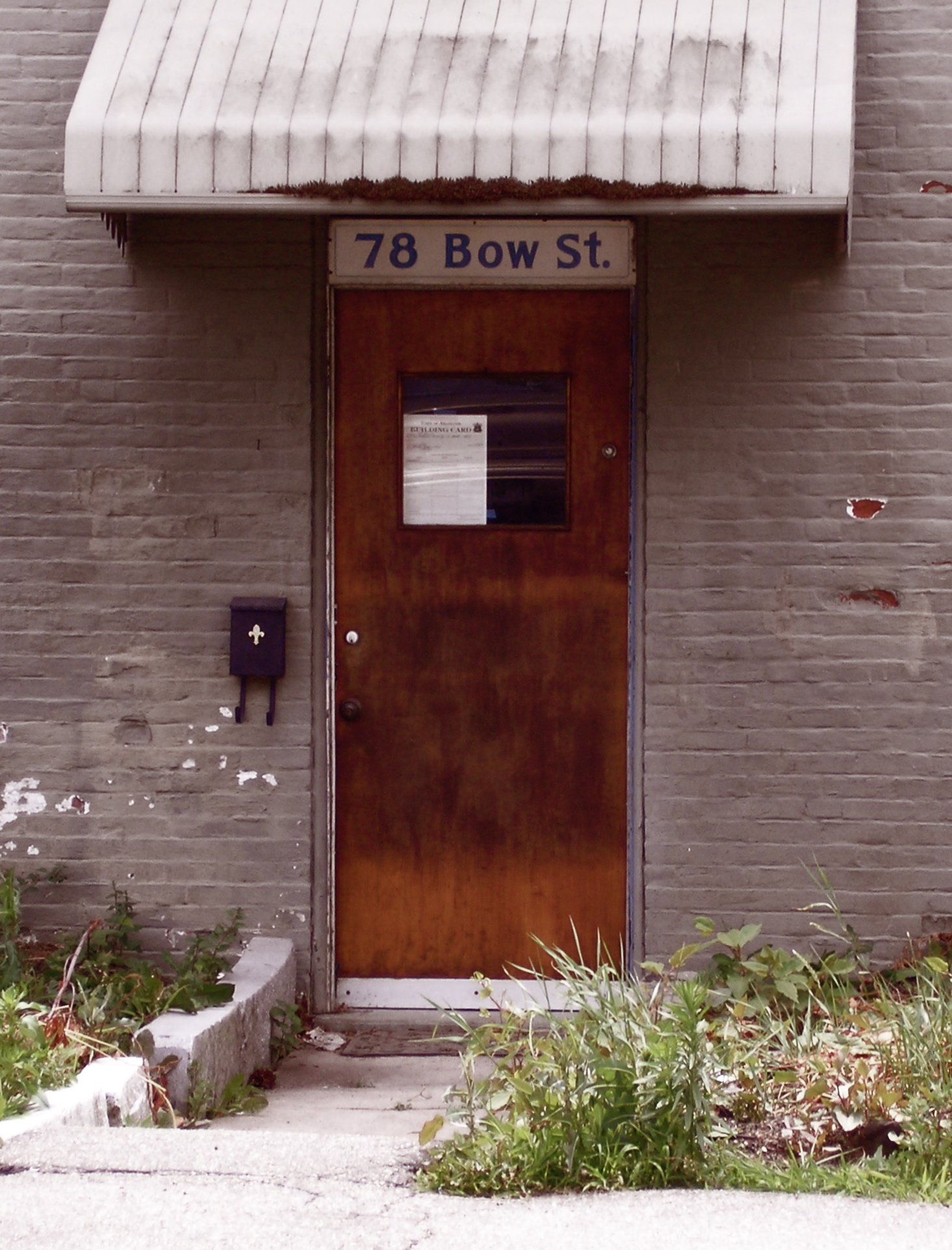
Documentation in the window of the empty 78 Bow Street, a space now occupied by Taylor Rental, on July 4, 2007.
“Entryways” is a series documenting some of the doors, gates, openings, portals, entrances and exits of Arlington.

A sign, showing the Stratton School's recent national recognition, over the playground doors on November 2, 2010.
“Entryways” is a series documenting some of the doors, gates, openings, portals, entrances and exits of Arlington.
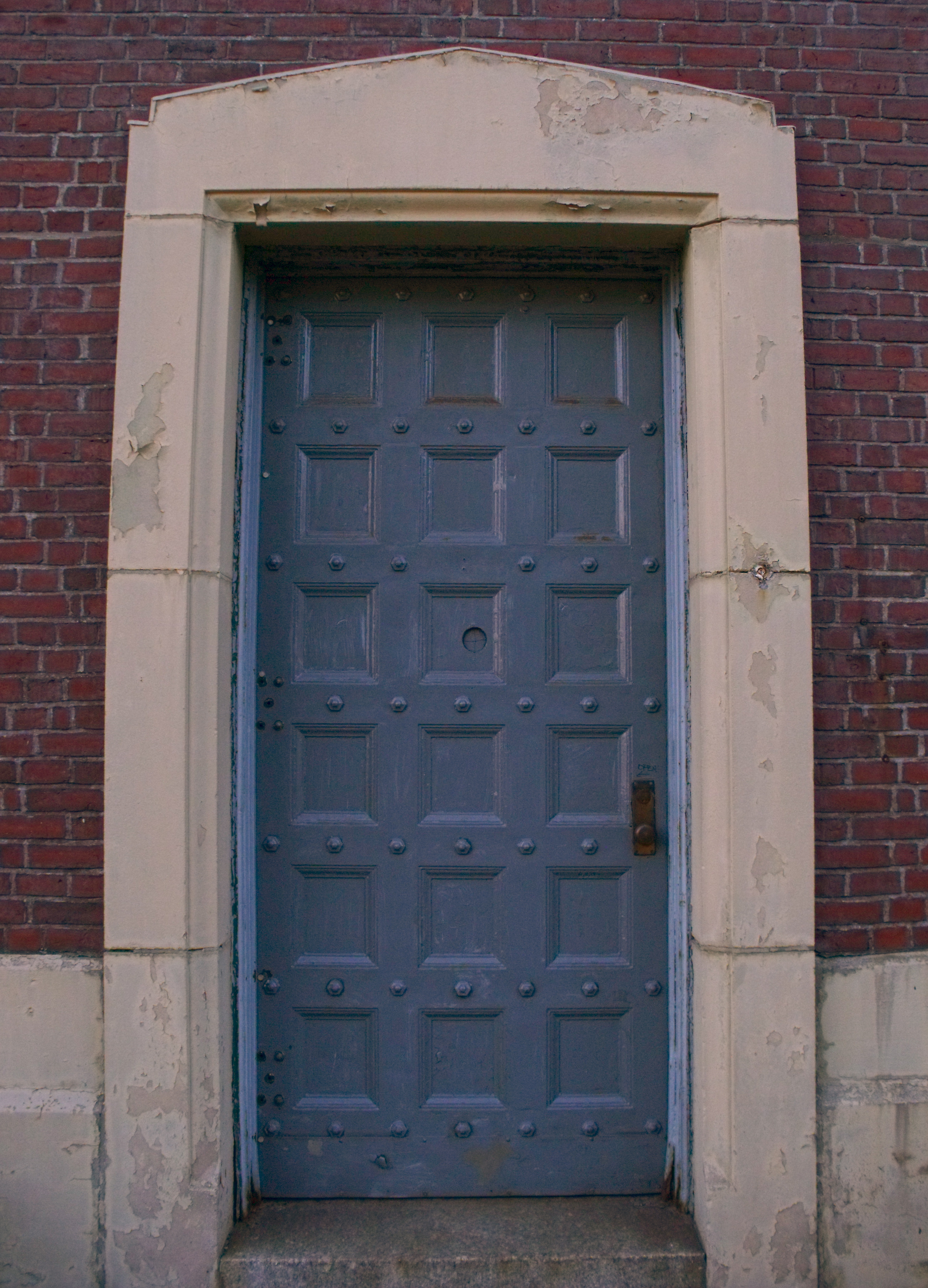
The Edison building on Mystic Street. July 22, 2010.
“Entryways” is a series documenting some of the doors, gates, openings, portals, entrances and exits of Arlington.

“Entryways” is a series documenting some of the doors, gates, openings, portals, entrances and exits of Arlington.
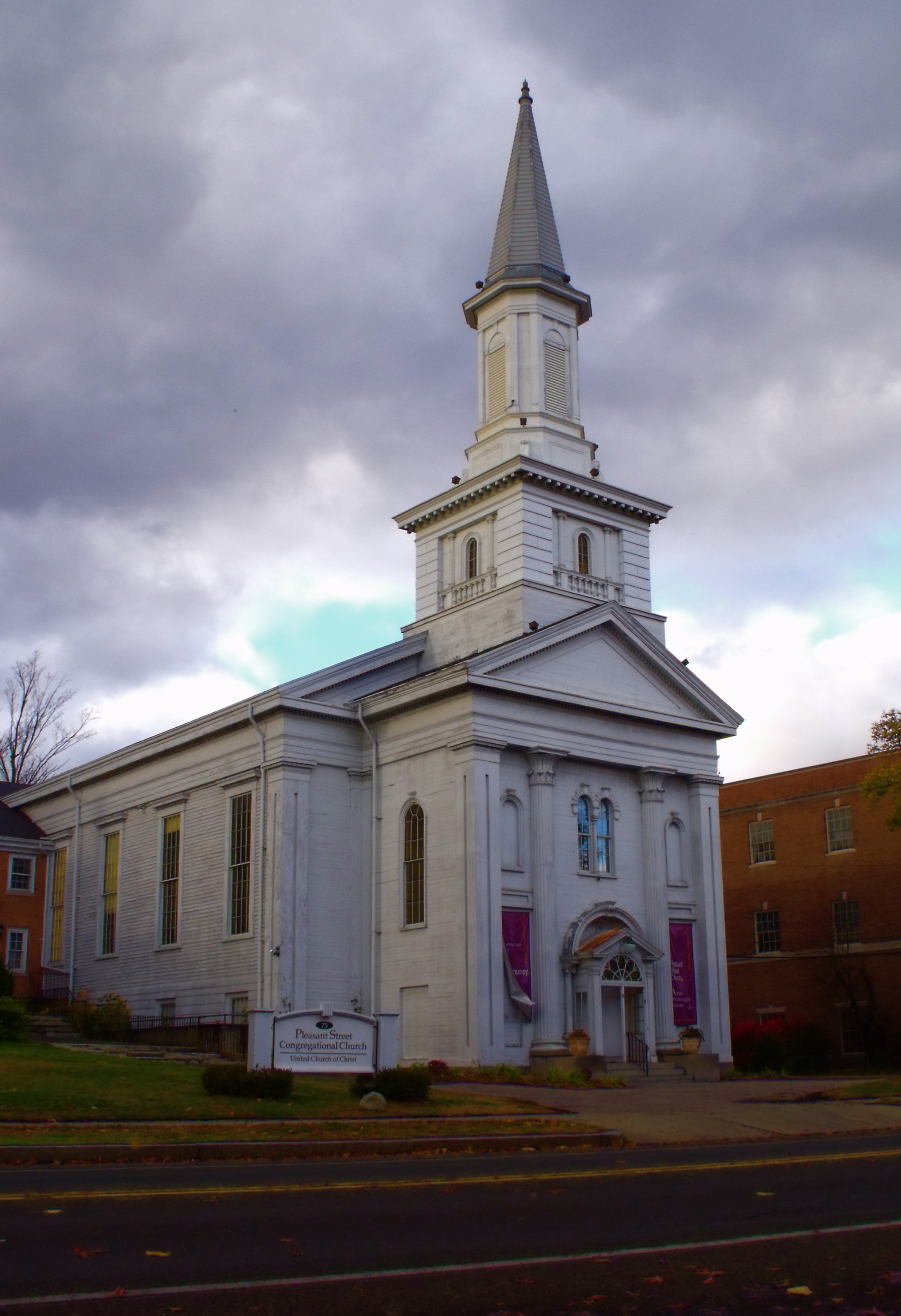
The Pleasant Street Congregational Church on November 5, 2010.

The carved pediment of the Wild Acre Inns on Pleasant Street. November 5, 2010.
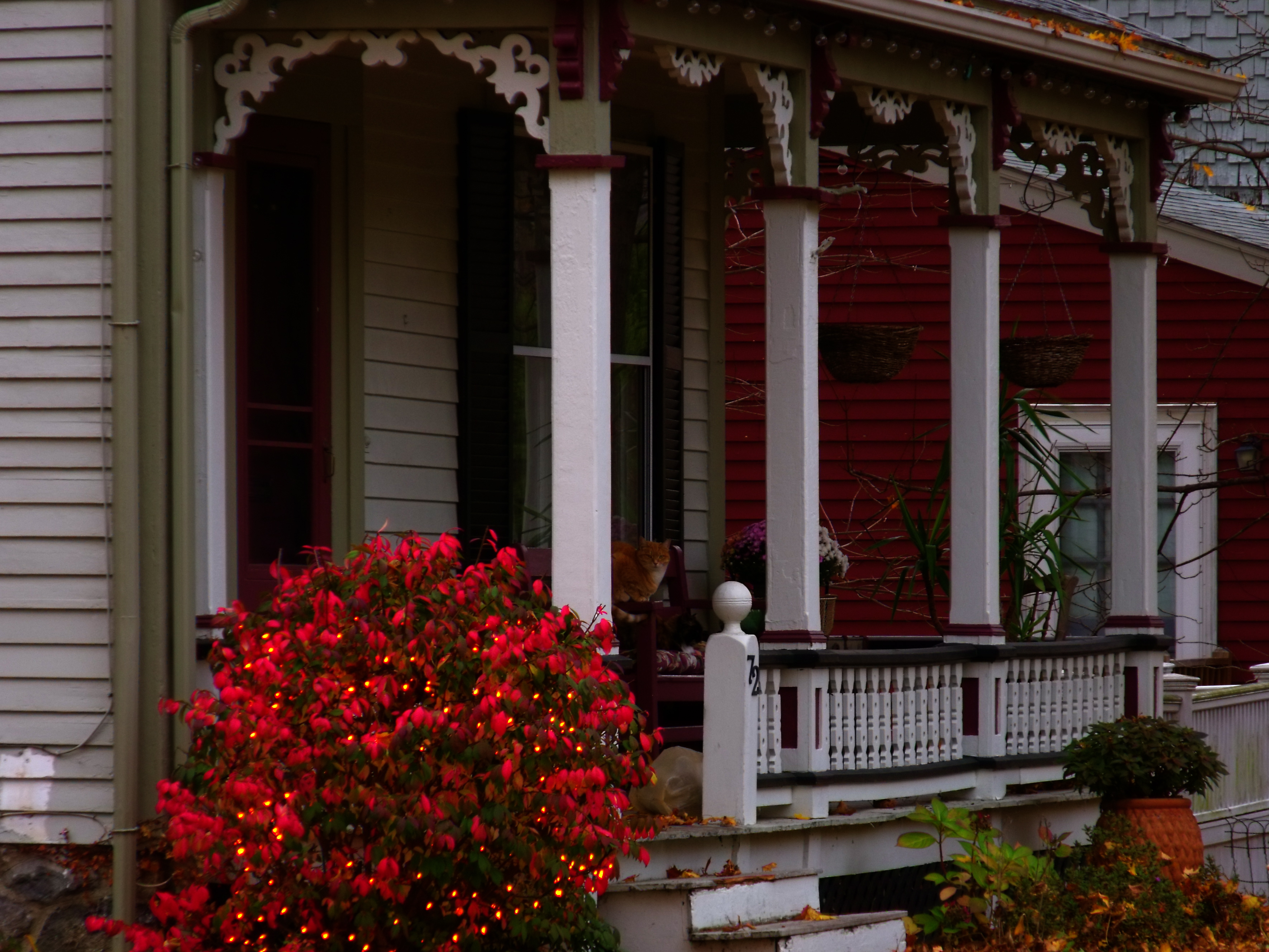
Orange lights (and an orange cat) decorate the front of a Crescent Hill Avenue home on October 30, 2010.
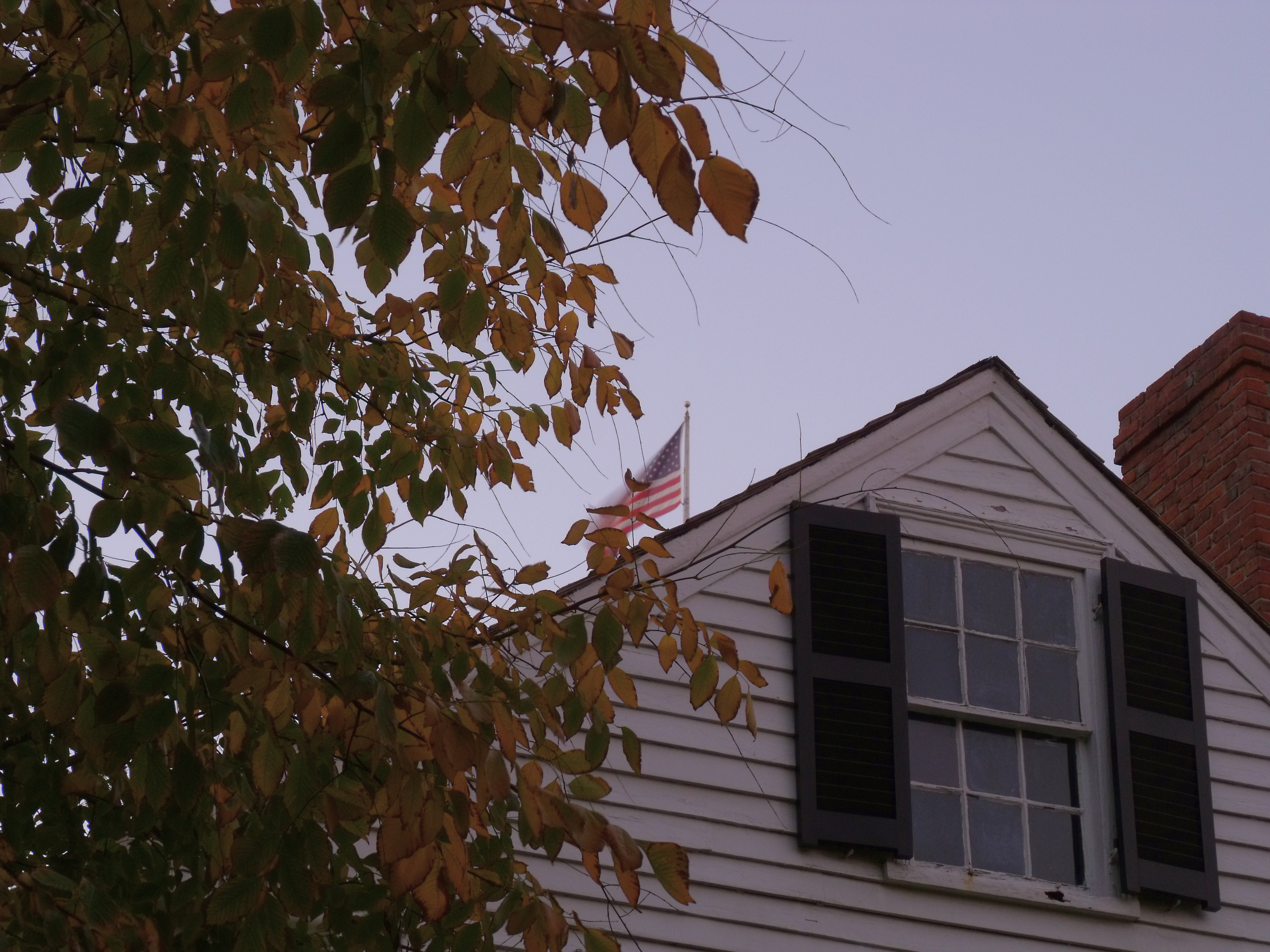
The American flag atop Winslow Towers peeks over the Cyrus E. Dallin Museum on October 13, 2010.

Precinct signs direct voters to their polling place inside Stratton School on November 2, 2010.

Looking upward at the decoration of an Arlington Center building. October 13, 2010.
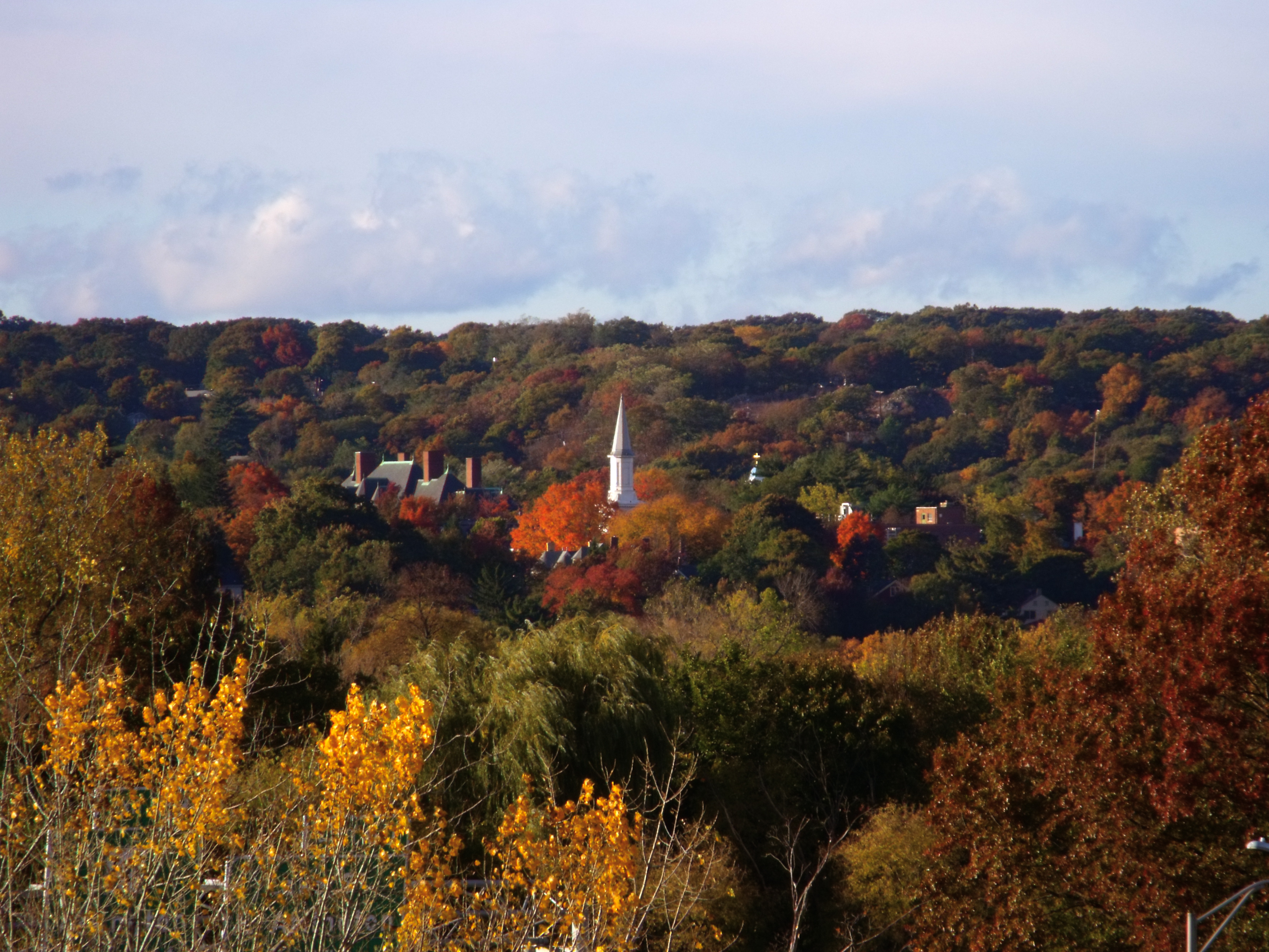
The Pleasant Street Congregational Church pokes out from the brilliant orange leaves of Autumn in this view of Arlington from the top of the Alewife Parking Garage. October 21, 2010.

Once a Queen-Anne style home known as "The Hollows," this building was vastly renovated in the early 20th century, and now is home to the Armenian Cultural Foundation. September 5, 2010.
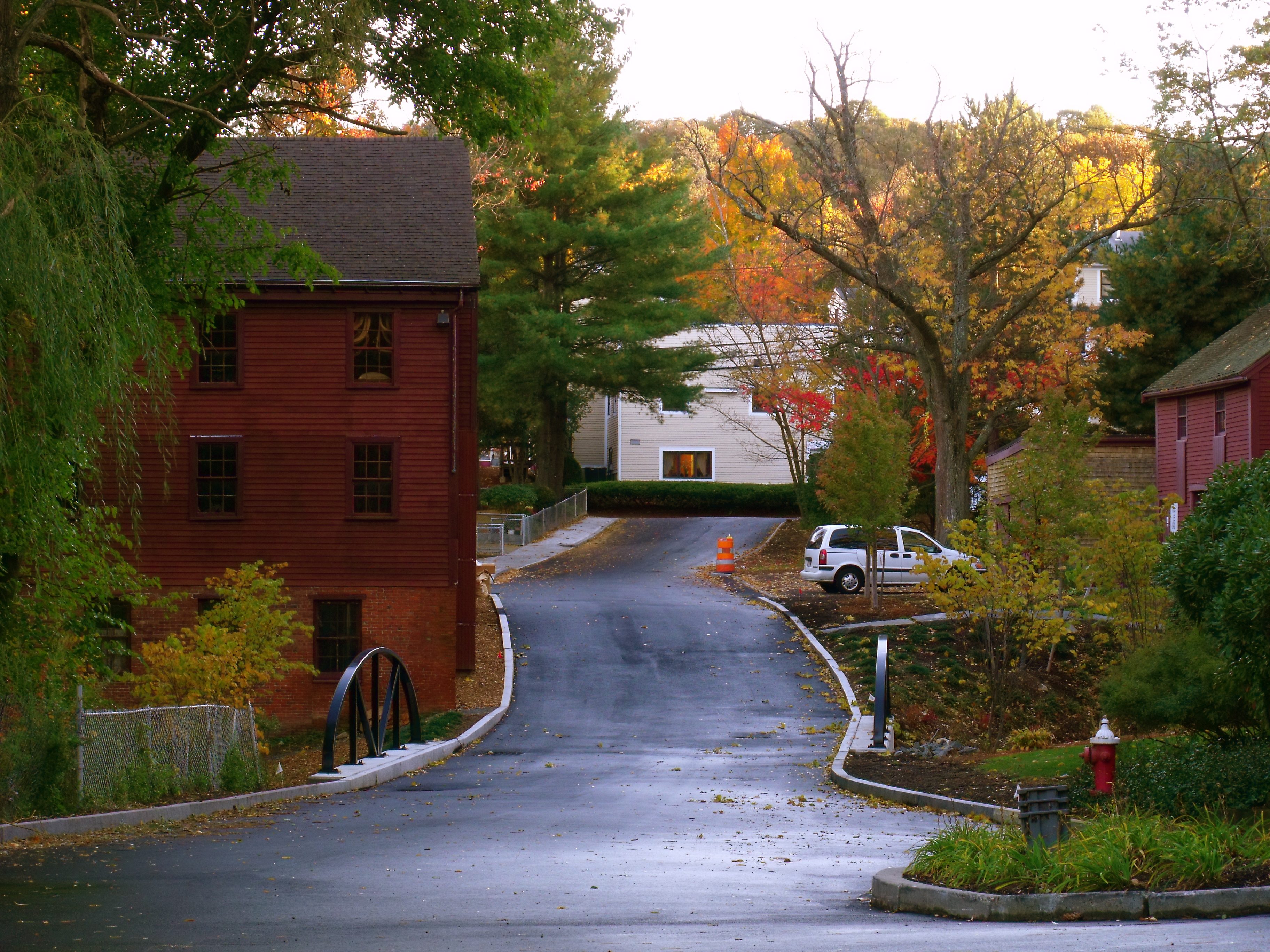
The recently refurbished Mill Lane, under which passes Mill Brook, by which stands the Old Schwamb Mill. October 21, 2010.

The property nestled atop Mount Gilboa, August 31, 2010.
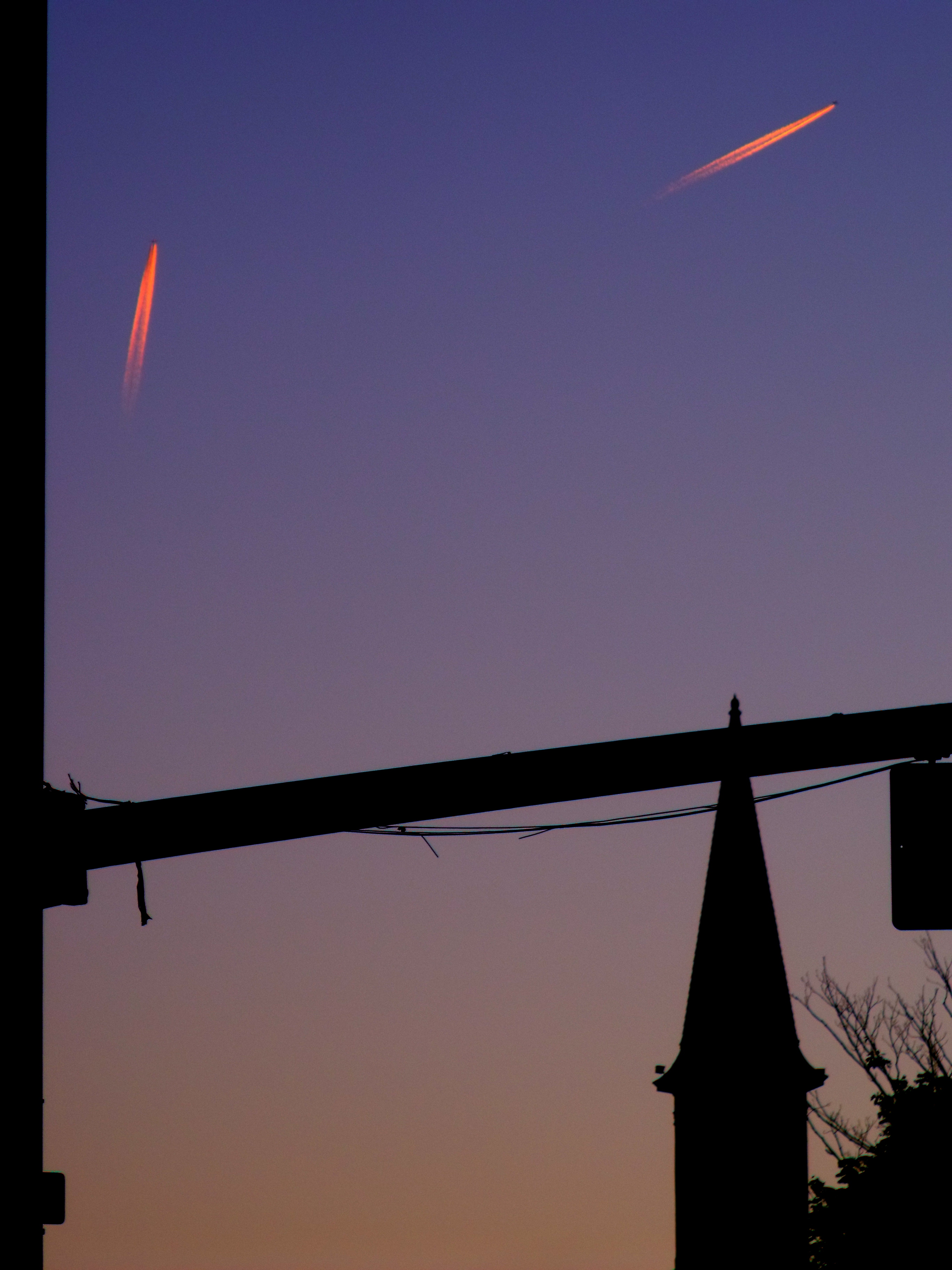
Light from the setting sun turns the vapor trails of two planes bright orange over the silhouette of the Pleasant Street Congregational Church on October 13, 2010.
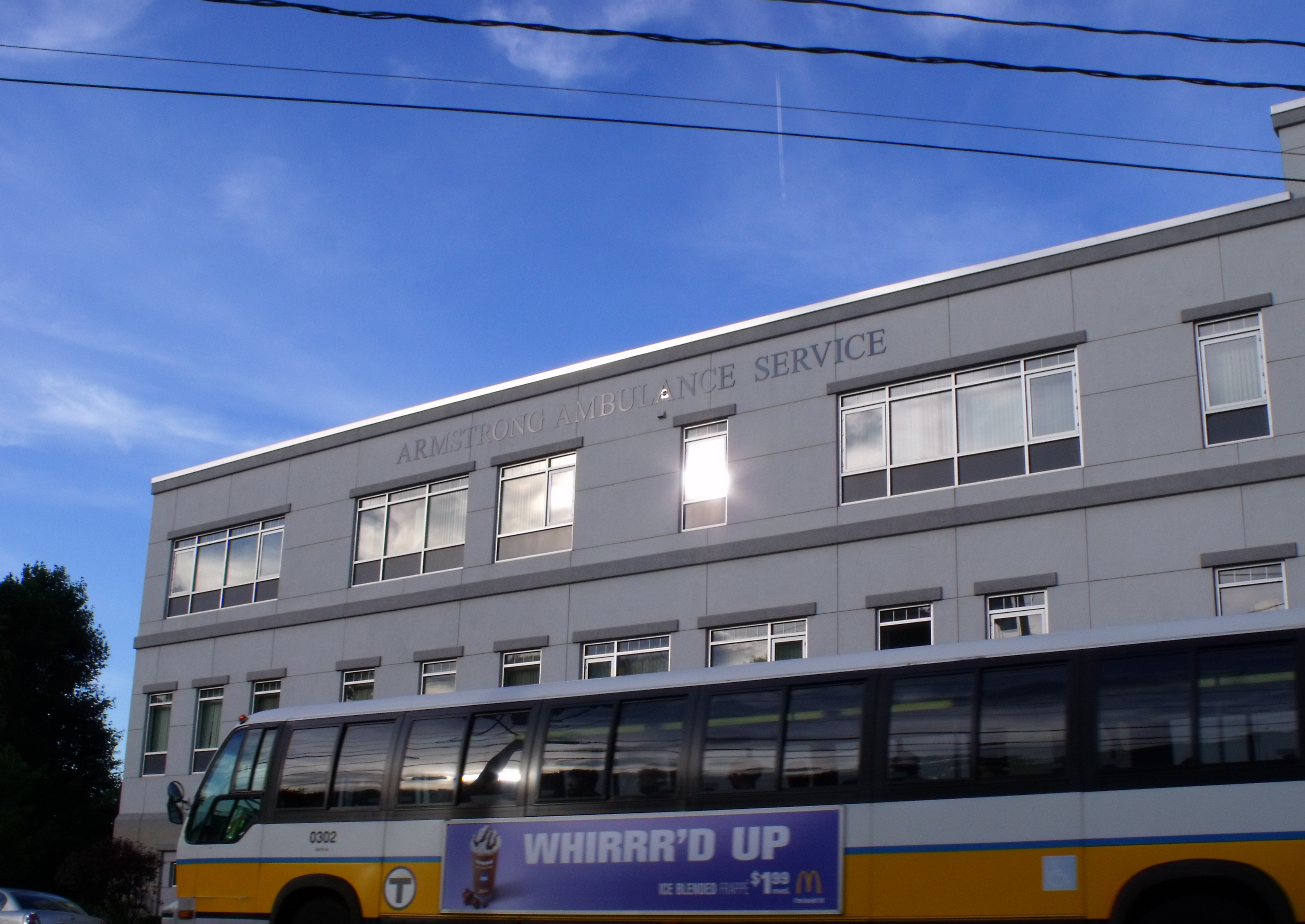
Since 2006, the new home of Armstrong Ambulance Service. July 22, 2010.
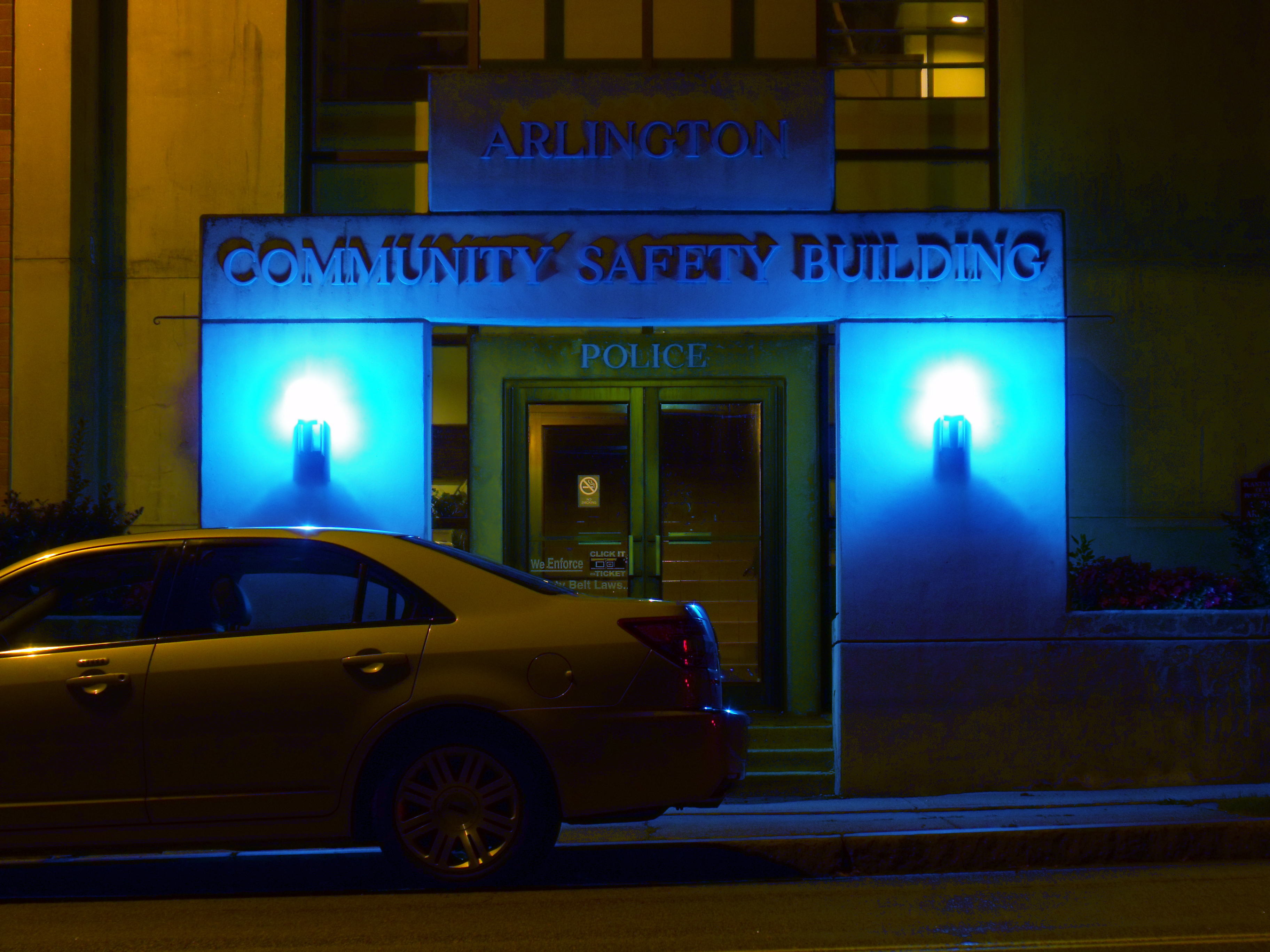
"Das blaue licht" of the Community Safety Building on the night of September 5, 2010.

Arlington's only ice rink lies beyond the Summer Street baseball grounds on August 31, 2010.

The illuminated clock tower of Arlington High School on the night of September 5, 2010.

Fireworks explode behind Town Hall on Town Night, September 24, 2010.
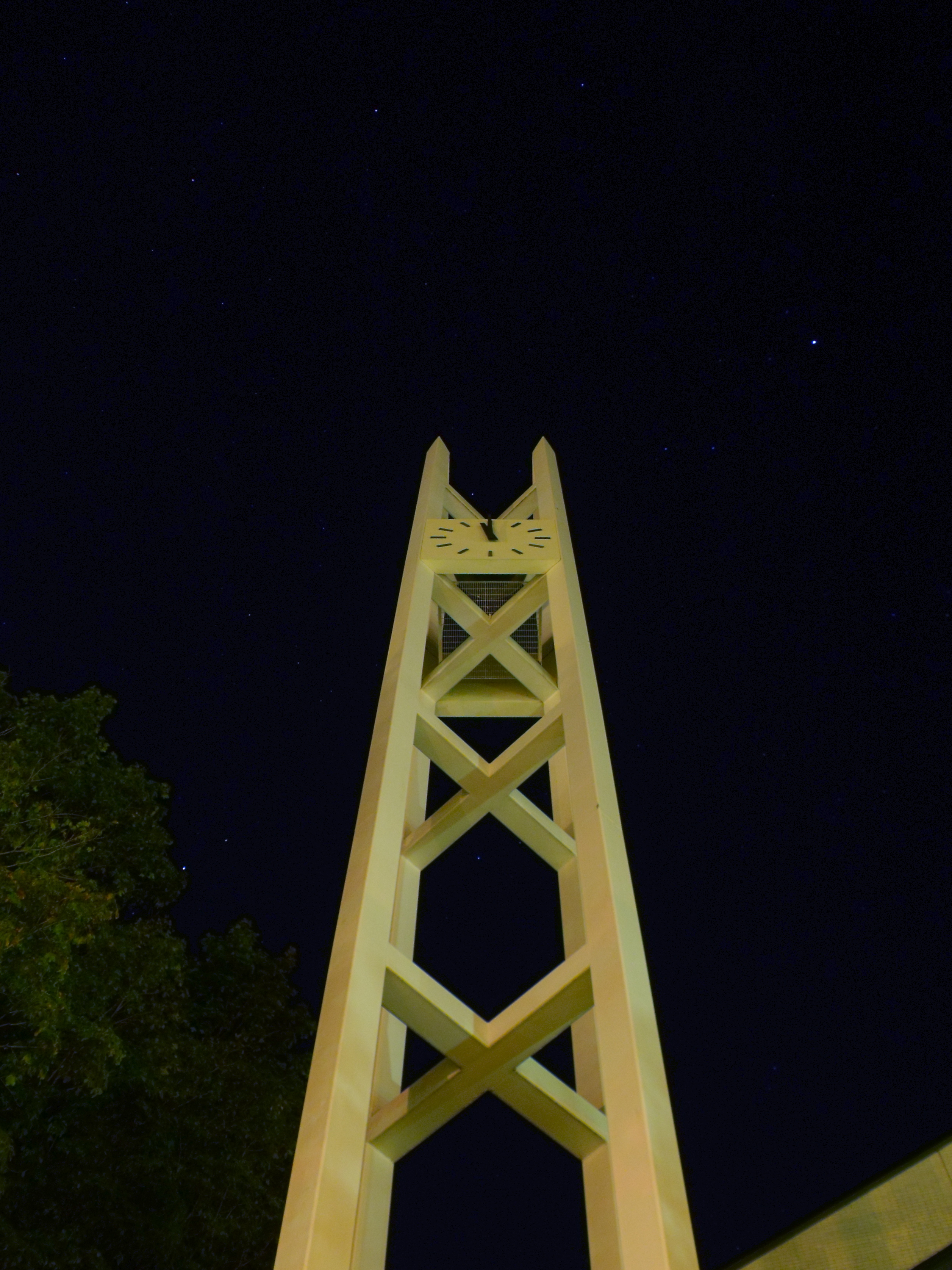
The clock tower of the Unitarian Universalist Church (formerly the First Parish Congregational), which has been rebuilt at least twice--once after a tornado knocked it over in 1871 and once after a fire destroyed the whole church in 1975. September 5, 2010.
To count down the days to the end of summer, I will be taking you on a virtual walking tour of Arlington–the same one outlined in 1937’s The WPA Guide to Massachusetts. Each entry will include an excerpt from the book about each site visited. Hopefully this will give us a little insight as to how things have changed in the past 73 years. This post brings us not only to the last stop on the tour, but the last day of summer 2010.
“The Water Standpipe (open to visitors each second Sun.) rises 50 feet above the loftiest point on Arlington Heights, emphasizing
the great difference between the lowest and highest altitude of this town. From a balcony near the top,
Boston and the harbor are visible to the east; to the west Mt. Monadnock and Mt. Wachusett are dim blue shapes on the horizon.”

The Park Avenue water tower on July 22, 2010.
To count down the days to the end of summer, I will be taking you on a virtual walking tour of Arlington–the same one outlined in 1937’s The WPA Guide to Massachusetts. Each entry will include an excerpt from the book about each site visited. Hopefully this will give us a little insight as to how things have changed in the past 73 years. Our second to last stop is the Home of Cyrus E. Dallin.
“The Home of Cyrus E. Dallin (private), 69 Oakland Ave., also serves as the eminent sculptor’s studio.
Mr. Dallin (1861- ), a native of Utah, is well known for his understanding portrayals of the American Indian.
Among his most noted works are ‘Appeal to the Great Spirit,’ which stands before the Museum of Fine Arts in Boston,
and ‘Medicine Man,’ in Fairmount Park, Philadelphia.”

At the time of the entry, Dallin still lived in the house and today it remains a private residence. August 31, 2010.
To count down the days to the end of summer, I will be taking you on a virtual walking tour of Arlington–the same one outlined in 1937’s The WPA Guide to Massachusetts. Each entry will include an excerpt from the book about each site visited. Hopefully this will give us a little insight as to how things have changed in the past 73 years. Number sixteen isn’t easy to spot, as it is nestled in pine trees on Claremont Avenue.
“St. Anne’s Chapel (open), between Hillside and Claremont Aves.,
was designed by Cram and Ferguson and completed in 1916. It is built in Romanesque style,
the interior and exterior being of local field-stone.
It is furnished with ancient ecclesiastical furniture, most of which came from Spain and Italy.”

St. Anne's Chapel on August 31, 2010.
To count down the days to the end of summer, I will be taking you on a virtual walking tour of Arlington–the same one outlined in 1937’s The WPA Guide to Massachusetts. Each entry will include an excerpt from the book about each site visited. Hopefully this will give us a little insight as to how things have changed in the past 73 years. A ways up Massachusetts Avenue brings us to site number fifteen.
“The Benjamin Locke House (private), 21 Appleton St., was built (1726) by a captain of the militia.
When the British passed by, about two o’clock on the morning of April 19, Captain Locke was awakened
and rushed out to arouse his neighbors. In a short time he was able to muster 26 men.
By afternoon the band grew to 52, which, with companies from surrounding towns,
joined in harassing the rear of Percy’s retreating column.”
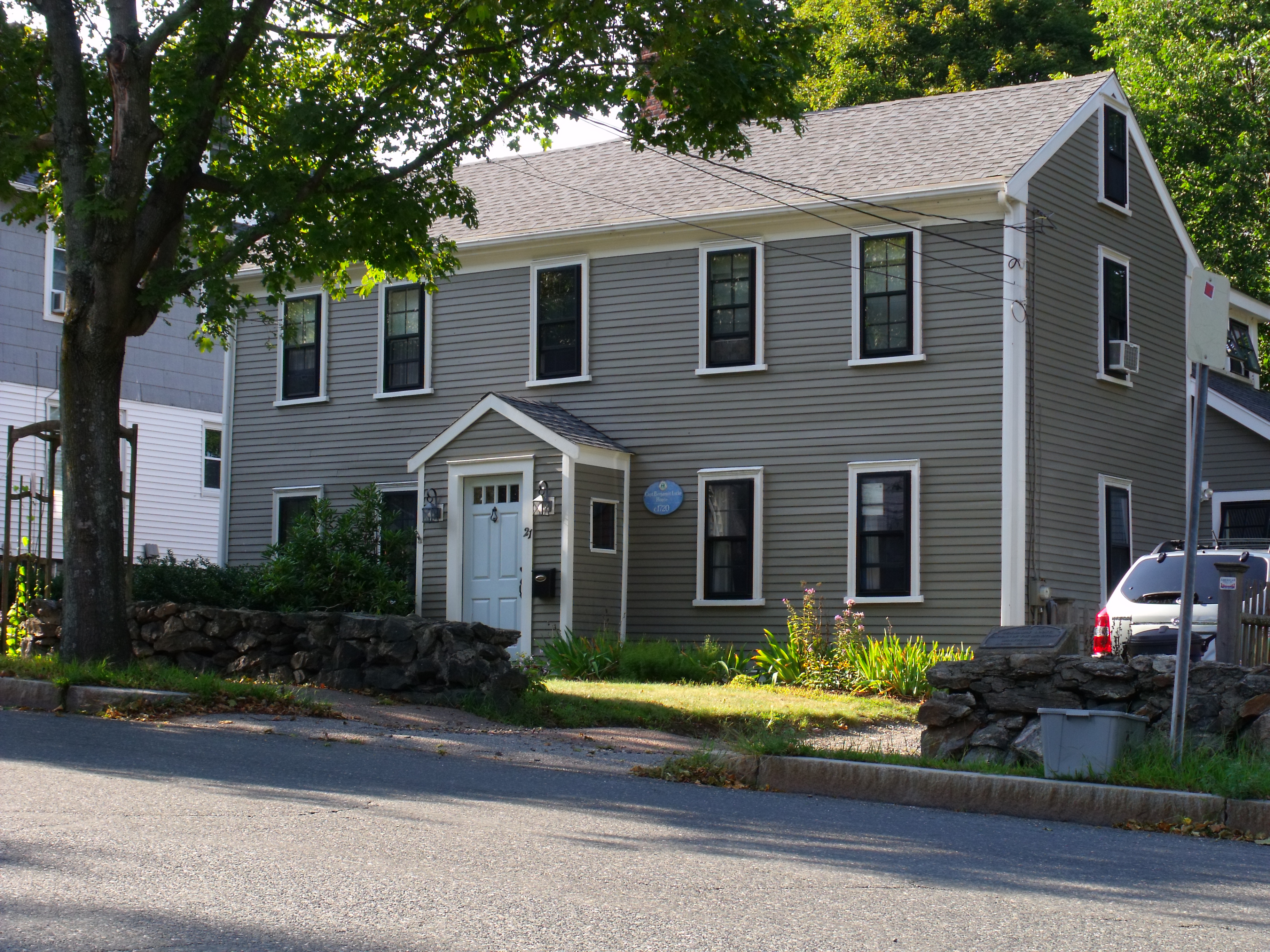
The Benjamin Locke House on August 31, 2010.
To count down the days to the end of summer, I will be taking you on a virtual walking tour of Arlington–the same one outlined in 1937’s The WPA Guide to Massachusetts. Each entry will include an excerpt from the book about each site visited. Hopefully this will give us a little insight as to how things have changed in the past 73 years. Though I wasn’t able to locate the tablet mentioned in the entry, stop number fourteen is the site of the Deacon Joseph Adams House.
“A tablet at 840 Massachusetts Ave. identifies the Site of the Deacon Joseph Adams House, from which
British soldiers stole the communion service of the First Parish during their retreat from Lexington and Concord.”

This apartment building (and a bus stop) now occupies 840 Massachusetts Avenue. September 5, 2010.
To count down the days to the end of summer, I will be taking you on a virtual walking tour of Arlington–the same one outlined in 1937’s The WPA Guide to Massachusetts. Each entry will include an excerpt from the book about each site visited. Hopefully this will give us a little insight as to how things have changed in the past 73 years. Lucky number thirteen is the Jason Russell House.
“The Jason Russell House (open weekdays except Mon. 2-5, Apr.-Oct.),
7 Jason St., a wooden two-story dwelling with pitched roof and central chimney was built in 1680…
The house was occupied by descendants of the Russell family until 1890. It is now the
headquarters of the Arlington HIstorical Society.”

A typical view of the Jason Russell House on July 12, 2010.
To count down the days to the end of summer, I will be taking you on a virtual walking tour of Arlington–the same one outlined in 1937’s The WPA Guide to Massachusetts. Each entry will include an excerpt from the book about each site visited. Hopefully this will give us a little insight as to how things have changed in the past 73 years. Town Hall at number twelve.
“The Town Hall designed by R. Clipston Sturgis and built about 1914,
is a contemporary adaptation of Colonial design. Two stories in height, the ‘great hall’
is surrounded on three sides by administrative offices.”
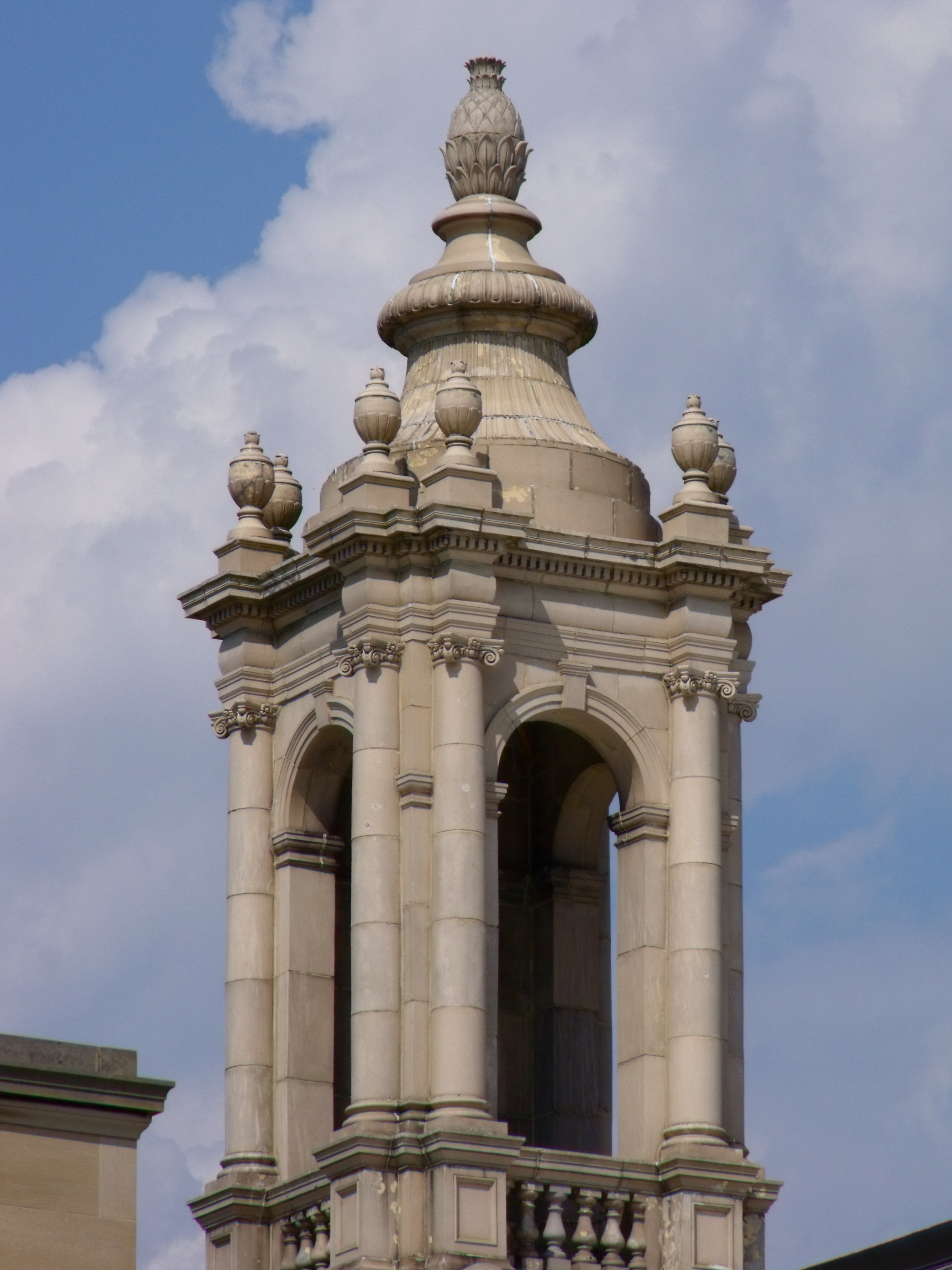
The cupola of Arlington's Town Hall atop which sits a pineapple, a traditional symbol of welcome in New England. August 9, 2010.
To count down the days to the end of summer, I will be taking you on a virtual walking tour of Arlington–the same one outlined in 1937’s The WPA Guide to Massachusetts. Each entry will include an excerpt from the book about each site visited. Hopefully this will give us a little insight as to how things have changed in the past 73 years. A little bit of backtracking brings us to our eleventh stop.
“The Whittemore-Robbins Mansion, behind the library, is a Federal
three-story building with a hip roof, a cupola or watch-tower, and four chimneys.”

The Whittemore-Robbins house on October 31, 2009.
To count down the days to the end of summer, I will be taking you on a virtual walking tour of Arlington–the same one outlined in 1937’s The WPA Guide to Massachusetts. Each entry will include an excerpt from the book about each site visited. Hopefully this will give us a little insight as to how things have changed in the past 73 years.
“The Arlington Public Library (open weekdays 10-9), known as the Robbins Memorial Library,
erected in 1892 from the designs of Gay & Proctor, is constructed of Ohio limestone in Italian Renaissance style…
The entrance is similar in style to the main door of the Cancellaria [sic] Palace in Rome.”
Though the book cites the building material as Ohio limestone and the designers as Gay & Proctor, the Robbins Library website states that the building was designed by Cabot, Everett and Mead and was built from Indiana sandstone.

The northeast side of the Robbins Library on the night of September 5, 2010.
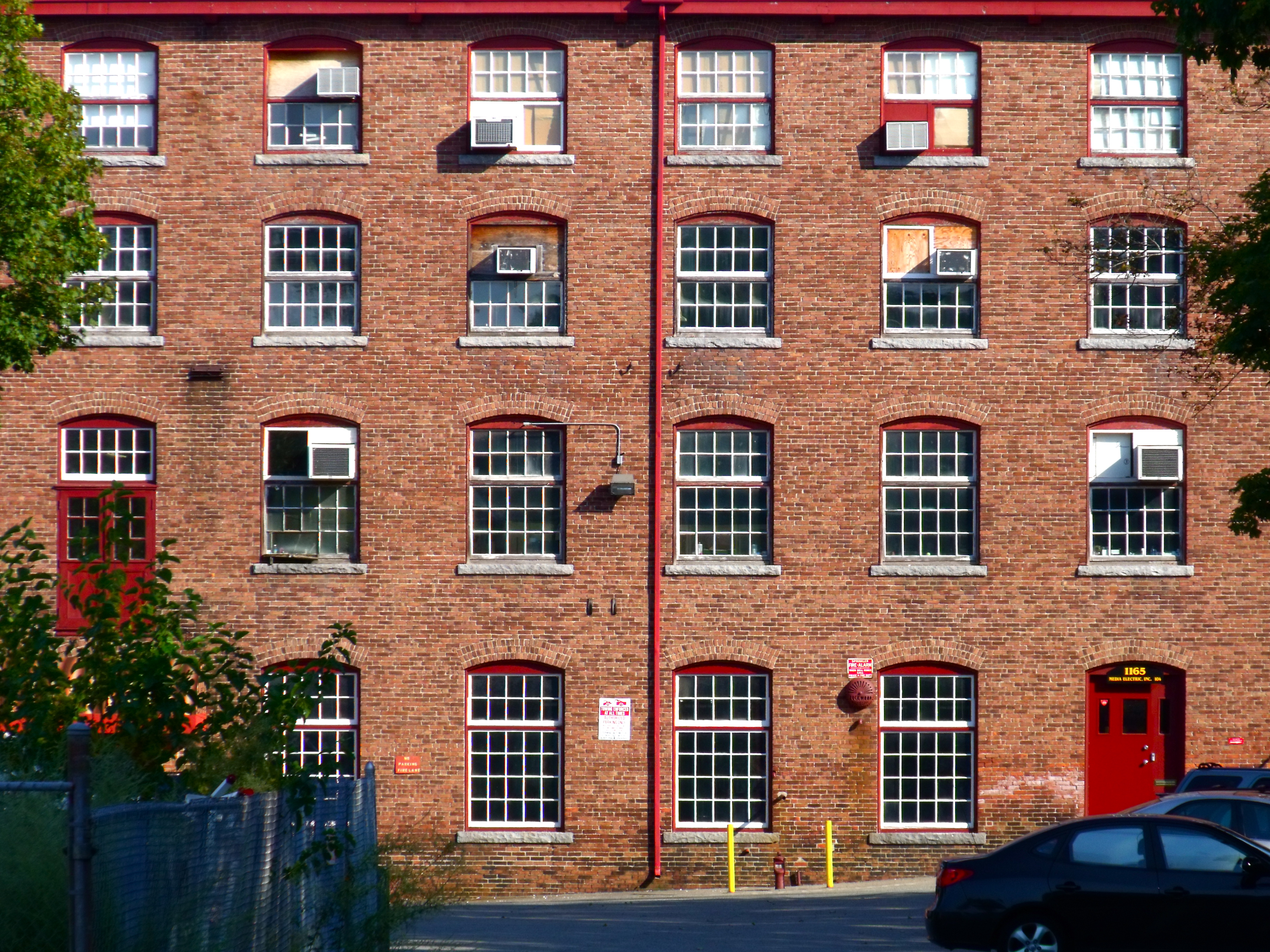
The western side of the Theodore Schwamb MIll building; originally a piano casing factory, it now is in use as an office building. August 31, 2010.
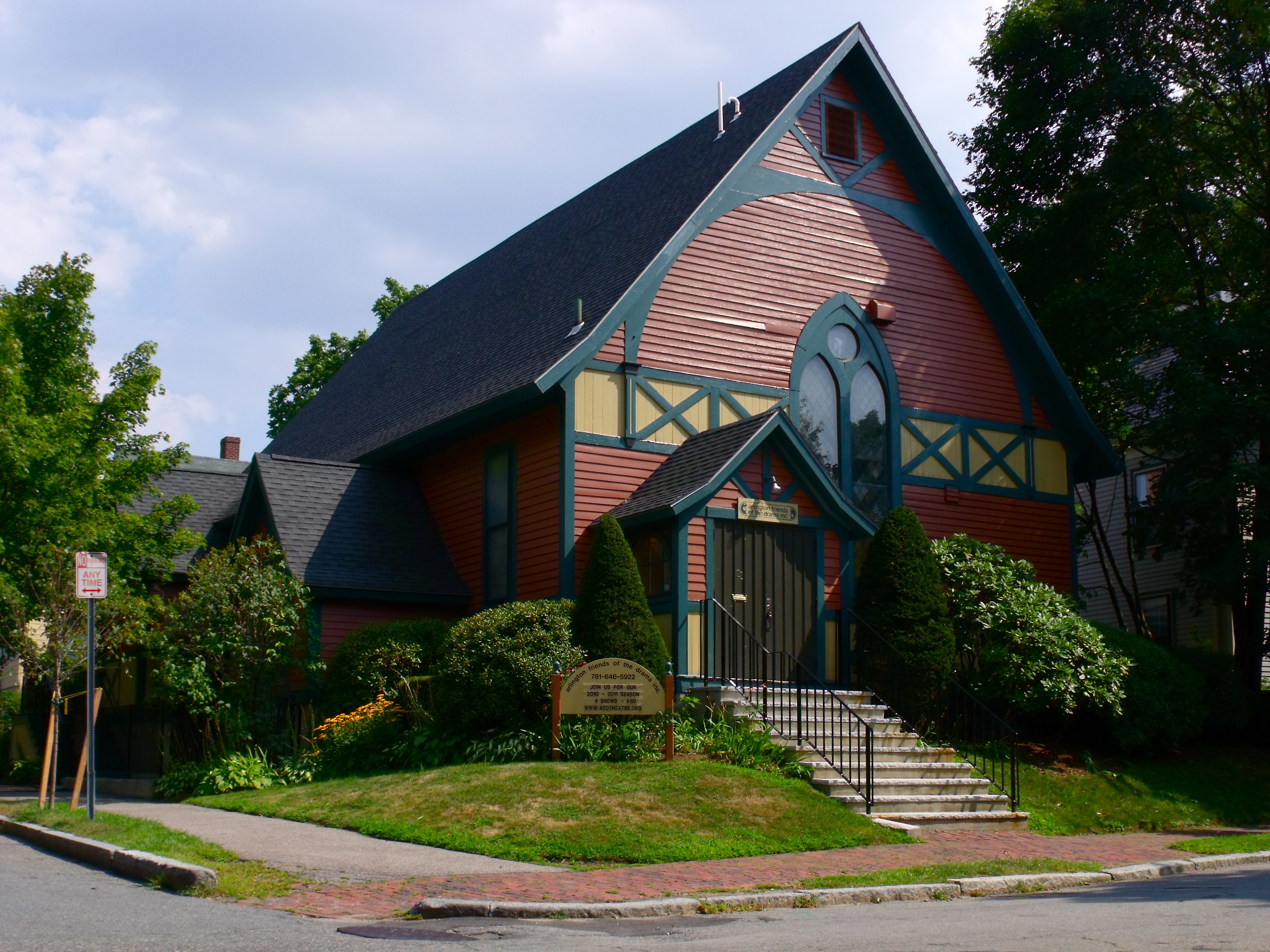
The building of St. john's Episcopal Church, which now houses one of the ten oldest community theatre groups in the United States. August 9, 2010.
“Given the primitive condition of the street, one would have difficulty believing that this was… in a suburb only six miles west of Boston.”
(p. 83, Arlington: Twentieth Century Reflections, Richard A. Duffy, Arcadia Publishing, 2003 reprinting.)
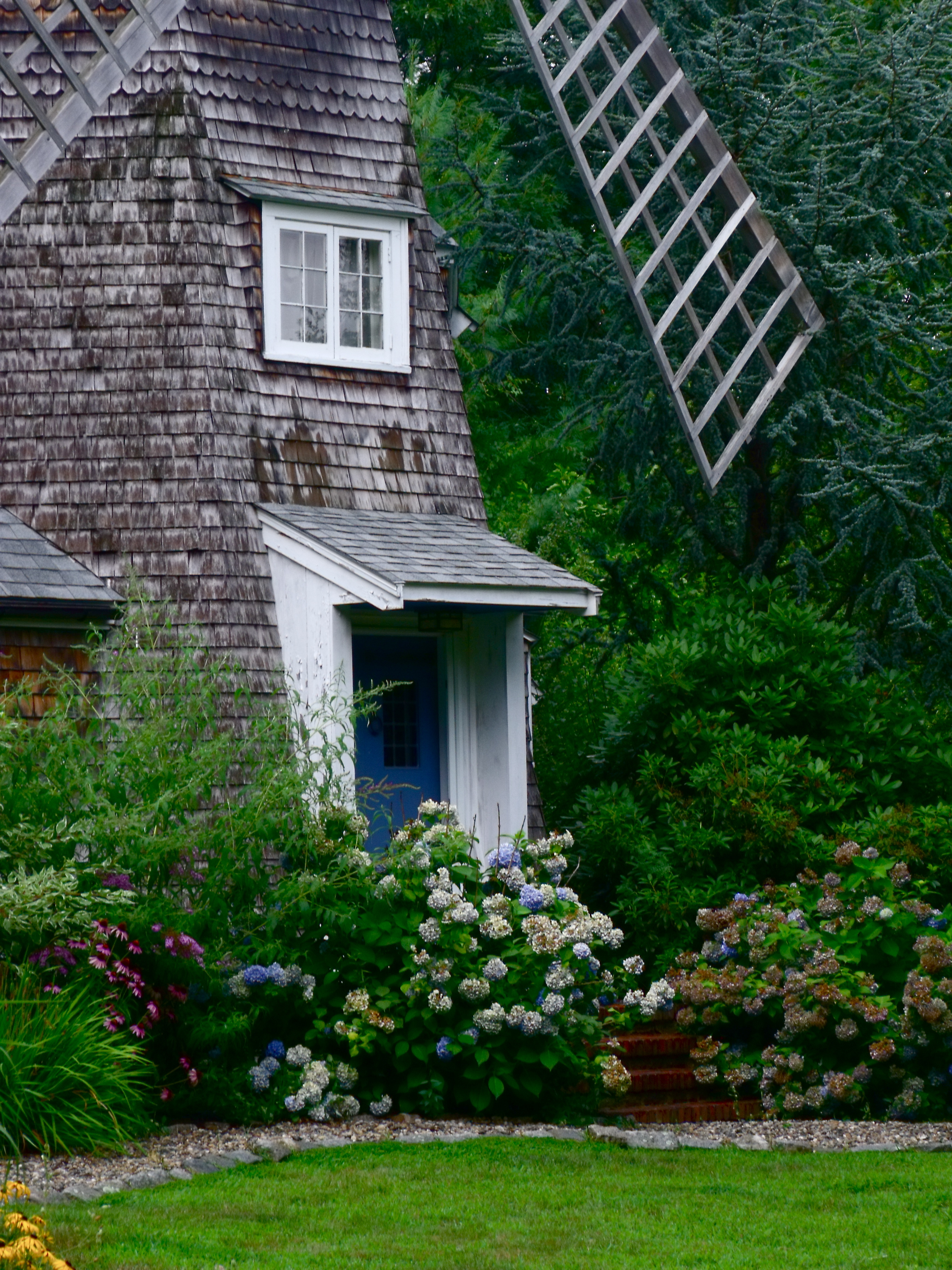
The front entrance to an Oldham Road residence on July 21, 2010.
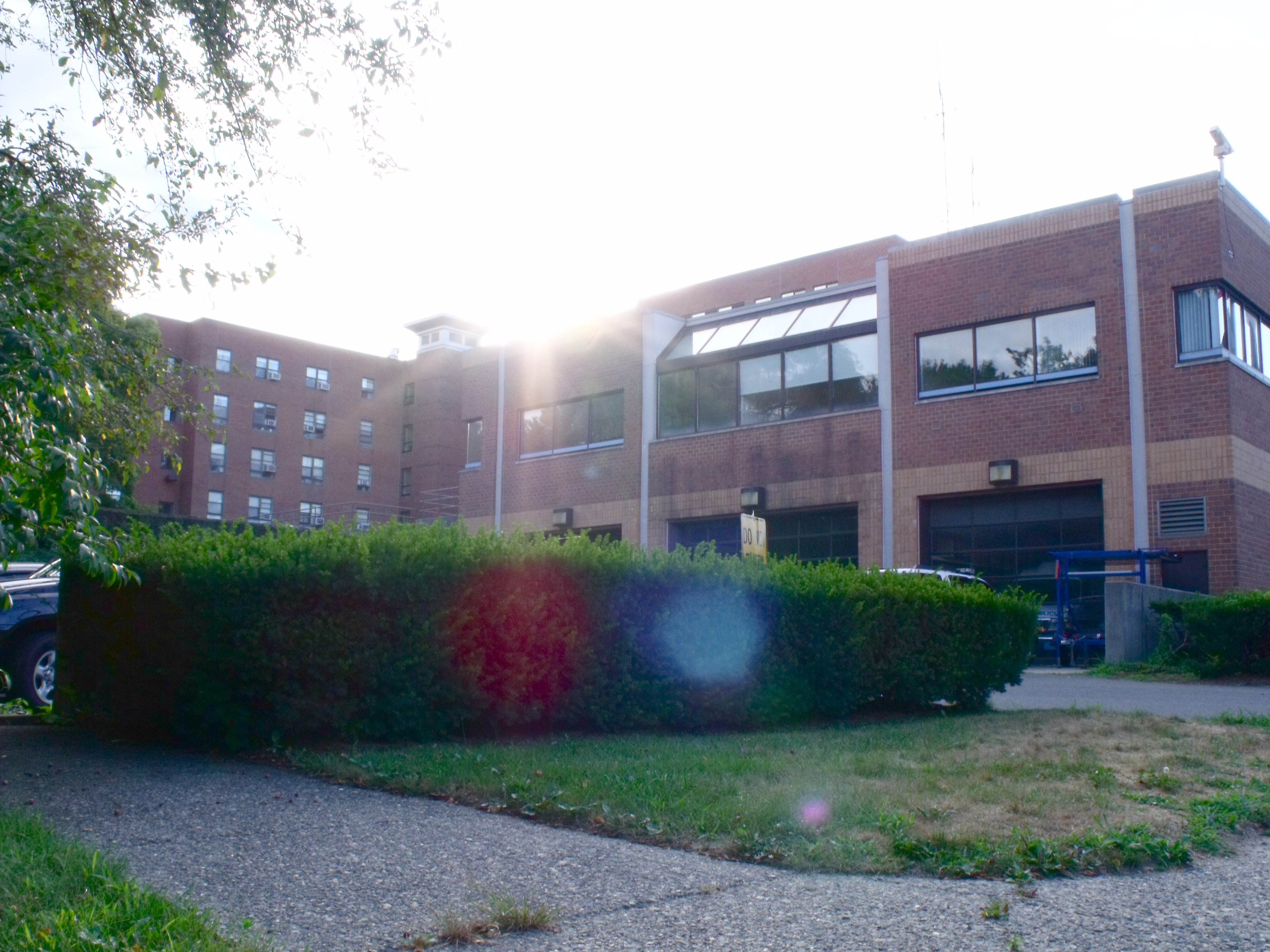
The Community Safety Building at the intersection of Summer Street and Mystic Street on July 22, 2010.

Construction on a stairwell at the intersection of route 60 and route 3, July 22, 2010.

A memorial outside the Central Fire Station on July 22, 2010.

The Park Avenue Water Tower as seen from across Arlington at the Turkey Hill Reservation (Green Water Tower) on June 7, 2010.

The Winslow Towers building on the night of July 3, 2010.

The recently reconstructed Park Circle Fire Station on the night of August 10, 2010.

The art deco façade--depicting workers building a house--of the Arlington Co-Operative Bank (Now Citizens Bank) on August 8, 2010.
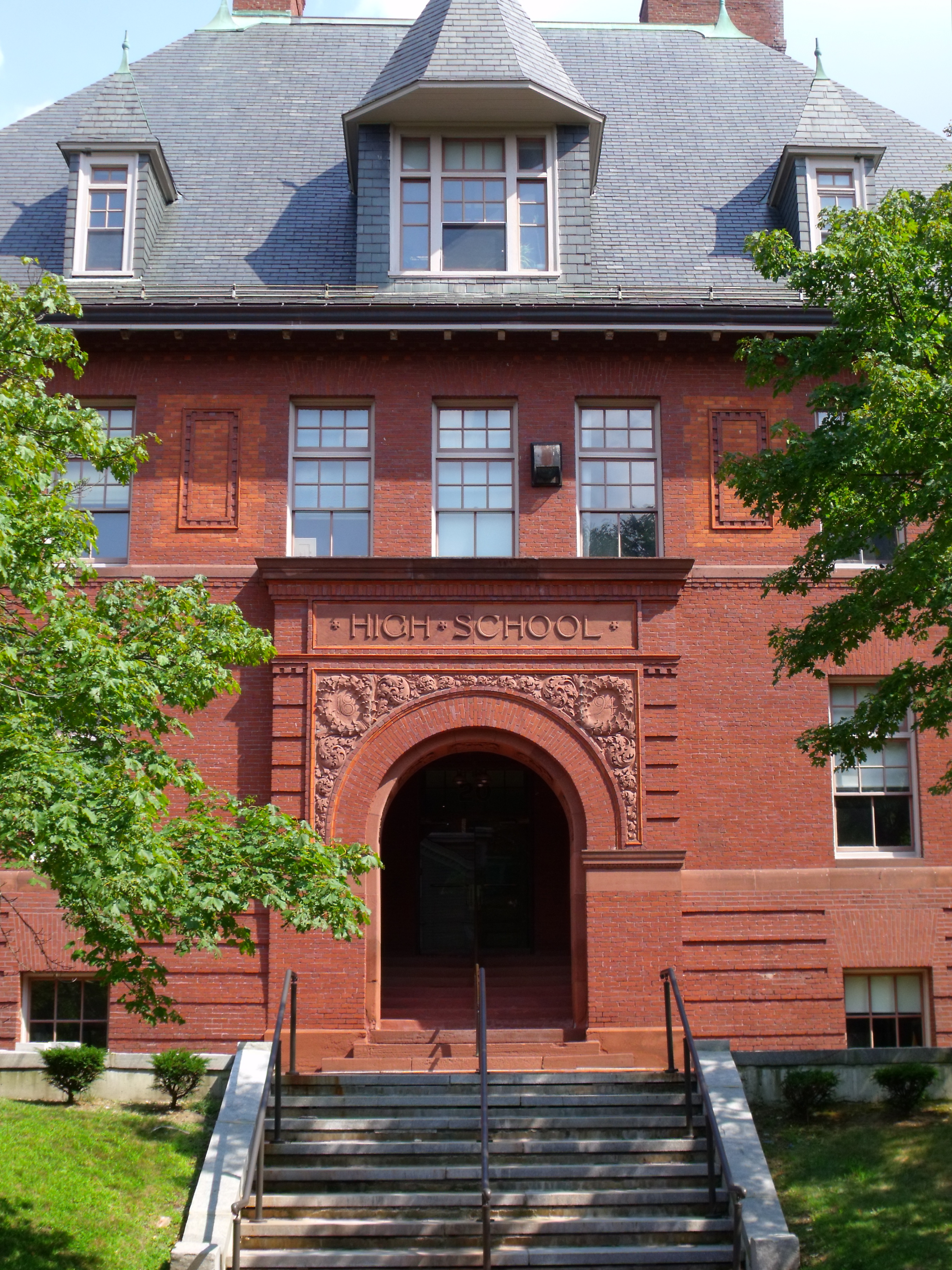
The Arlington Senior Center and former Arlington High School on August 9, 2010.

The bright pink blooms of Spring in the yard of a Jason Street home, April 30, 2010.

The entryway to 287 Massachusetts Avenue on July 27, 2010.

The sign about the Broadway Historic District mentions the Greek Revival style home seen in the background. July 22, 2010.

The marquee of the Regent Theatre on July 22, 2010.
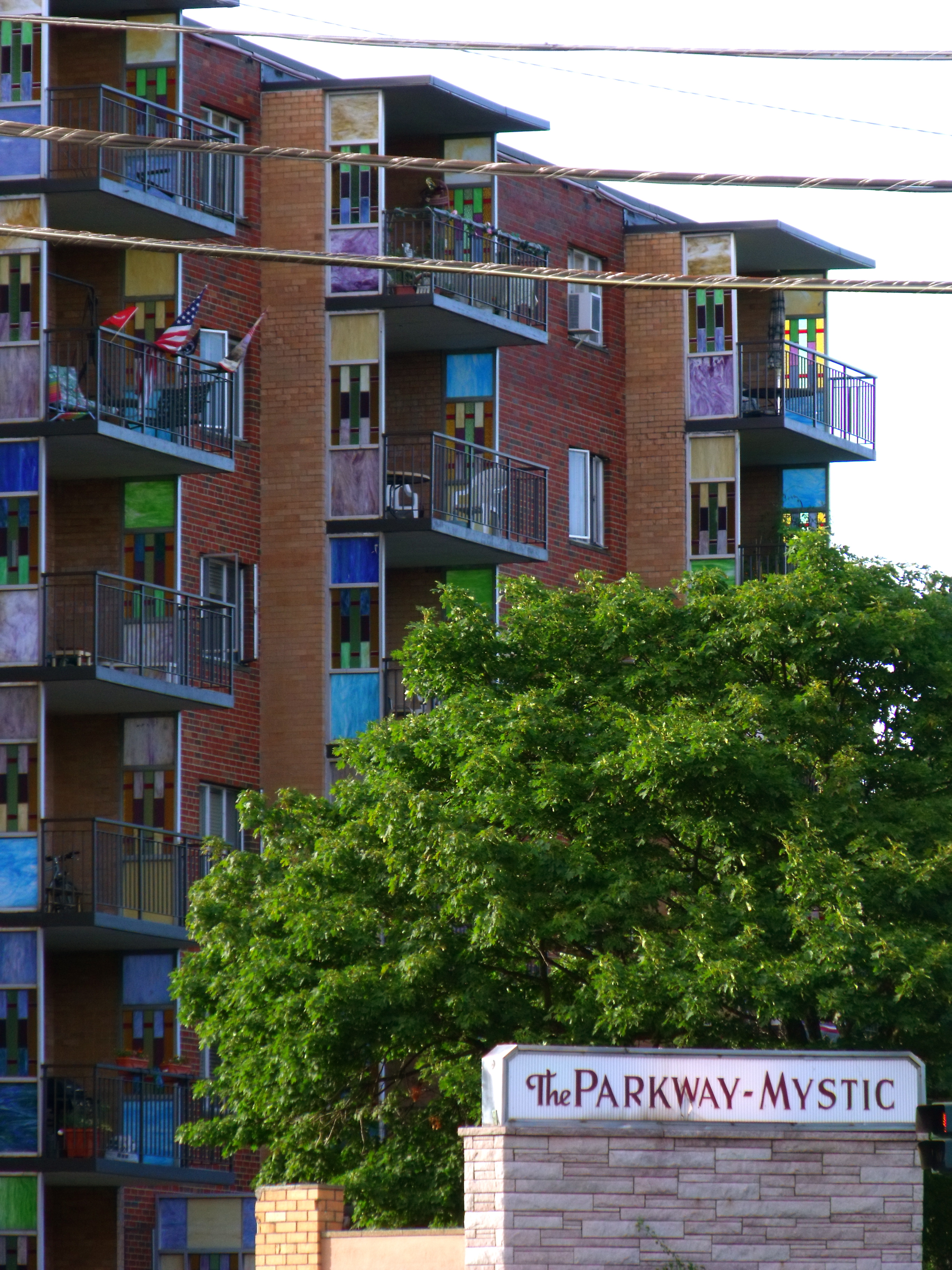
The Parkway Mystic on Mystic Valley Parkway, July 22, 2010.

A car passes in front of the Blue Ribbon Bar-B-Q on the night of July 3, 2010.

The Mystic Valley Lodge looms over Academy Street on July 3, 2010.

The sign for the Arlington Gas Light Company atop the building now housing the Department of Public Works, June 30, 2010.
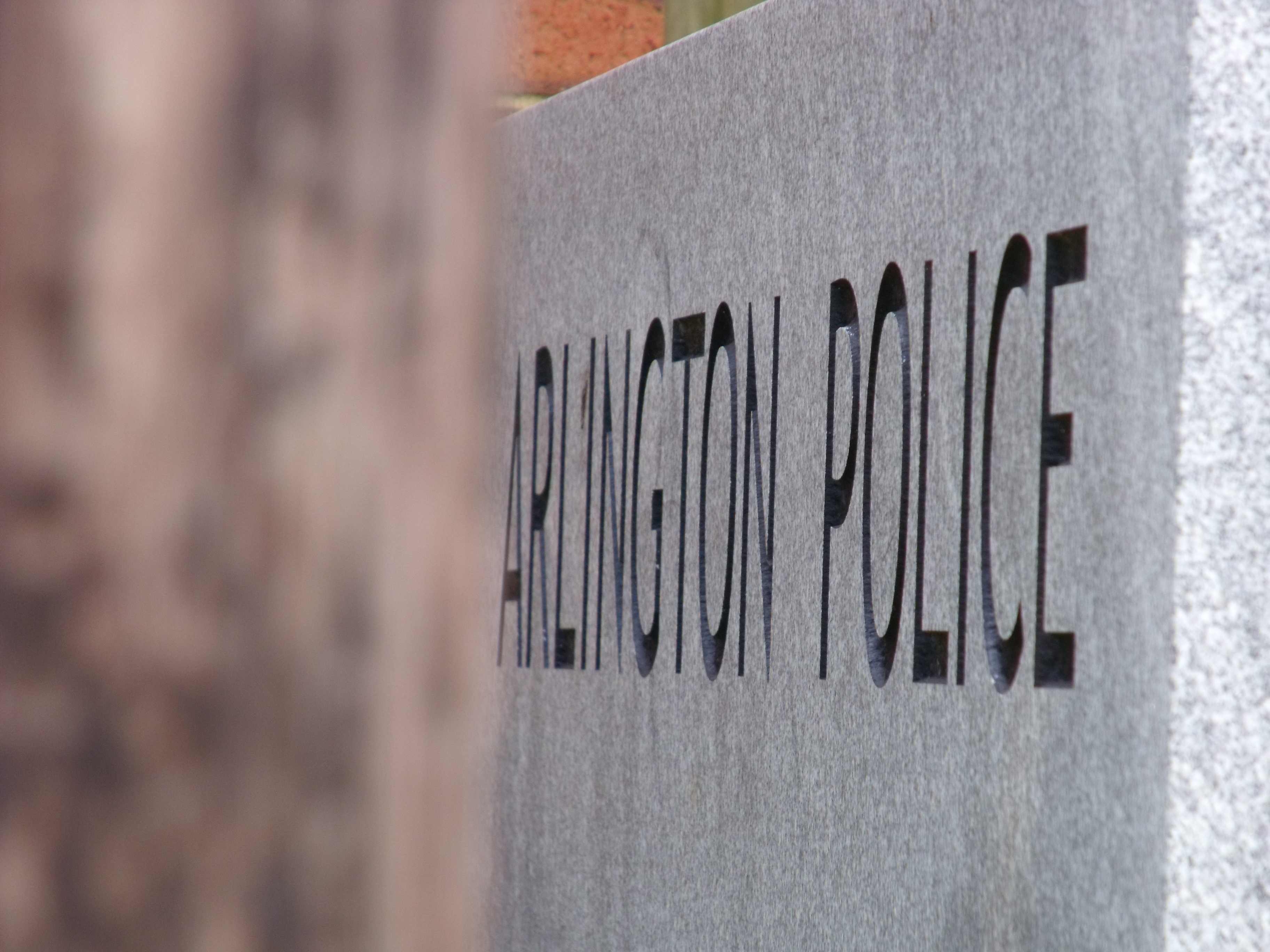
The sign outside of the Arlington Public Safety Building at the corner of Summer Street and Mystic Street, July 12, 2010.

78 Bow Street lies empty (but not for long, as Taylor Rental now occupies the space) on July 4, 2007.
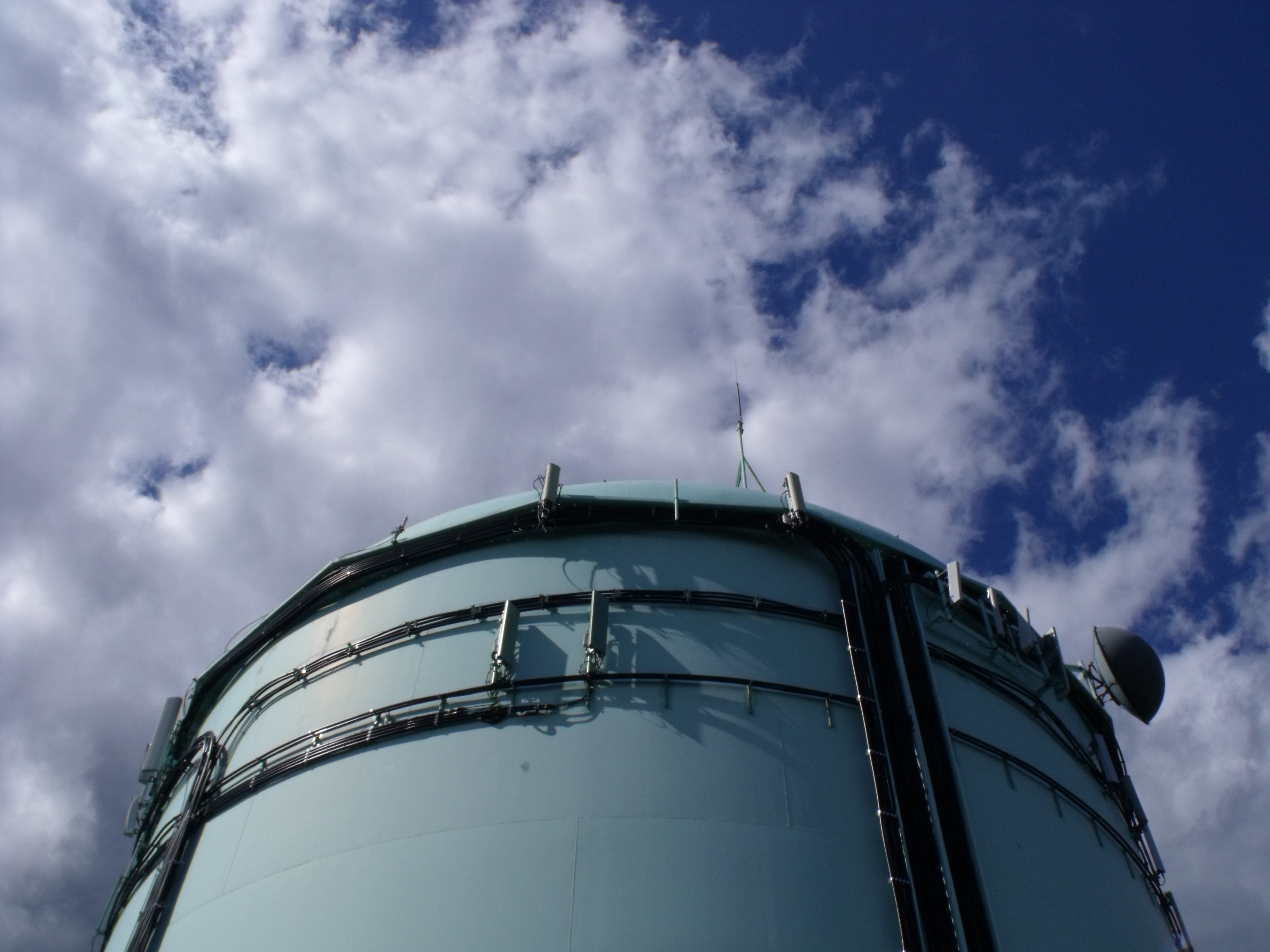
The water tower on the Turkey Hill Reservation, June 6, 2010.
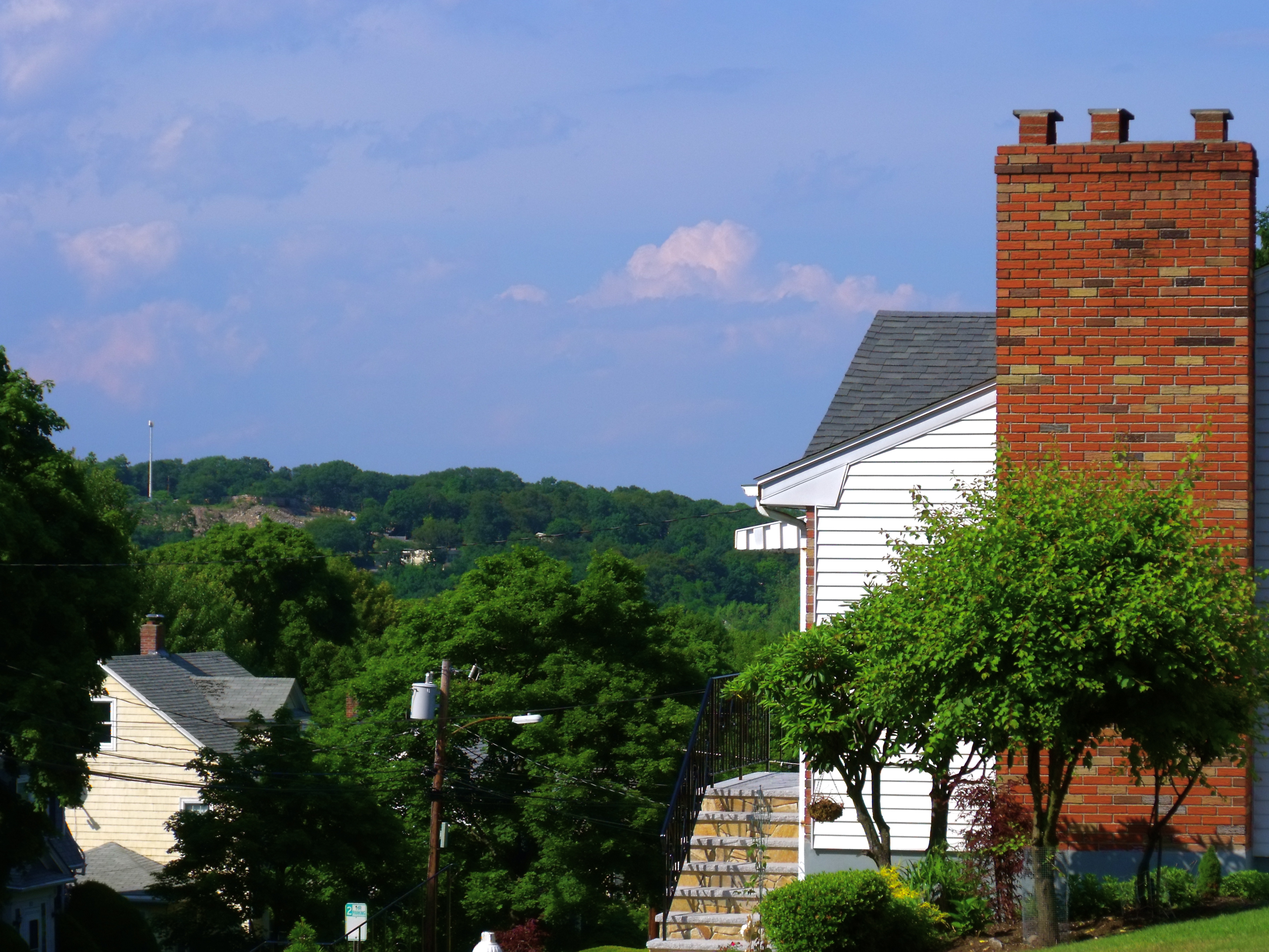
The rubble piles of the Symmes site (left) seen from the corner of Gray Street and Lockeland Avenue, June 4, 2010.

Signs warning of a low bridge on Grove Street, June 30, 2010.

A house on Dickson Avenue is put on stilts for foundation repair, June 24, 2010.

The Cyrus E. Dallin Art Museum (which occupies the Jefferson Cutter House) stands in Whittemore Park on the night of July 3, 2010.
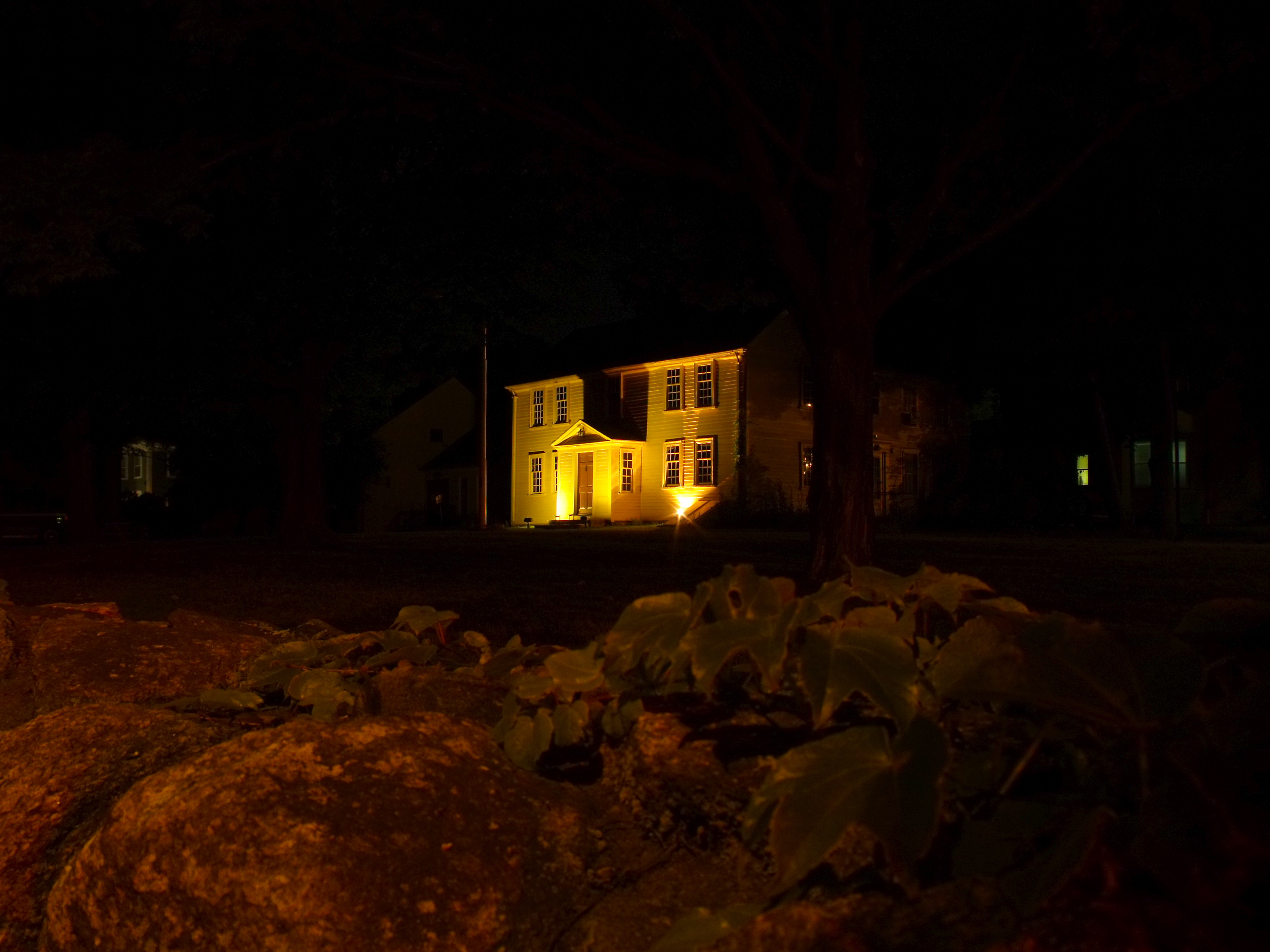
The Jason Russell House on the night of July 3, 2010.

The Whittemore-Robbins House watches over the Old Burying Ground on the night of January 13, 2006.

Arlington Town Hall on the night of August 19, 2006.

A view of the Route 2 Pedestrian overpass between Park Avenue and Pleasant Street June 27, 2010.

Haze from Canadian forest fires and the Park Ave. water tower on May 31, 2010.
 Pictures of Arlington